
How to Choose the Right Heavy Metal Testing Laboratory for Your Needs
Understanding Heavy Metals and Common Sources of Exposure
Heavy metals are dense elements that occur naturally in the earth’s crust. While some metals like iron, zinc, and copper play vital biochemical roles in human biology, non-essential elements like lead, mercury, cadmium, and arsenic serve no physiological purpose. In fact, these toxic elements can interfere with enzymatic cellular processes even at low levels.
Understanding where these toxicants come from helps clarify why specialized testing is so crucial. Common environmental and workplace exposure pathways include:
- Arsenic Exposure: Contaminated well water, agricultural chemicals, wood preservatives, and certain seafoods (which often contain non-toxic organic arsenic).
- Lead Toxicity: Flaking paint in homes built before 1978, legacy plumbing fixtures, industrial soil, and contaminated airborne dust.
- Mercury Sources: Industrial emissions, coal combustion, dental amalgams (inorganic mercury), and large predatory ocean fish like swordfish or tuna (methylmercury).
- Cadmium Accumulation: Tobacco smoke (both active smoking and secondhand exposure), industrial smelting, battery manufacturing, and contaminated leafy crops.
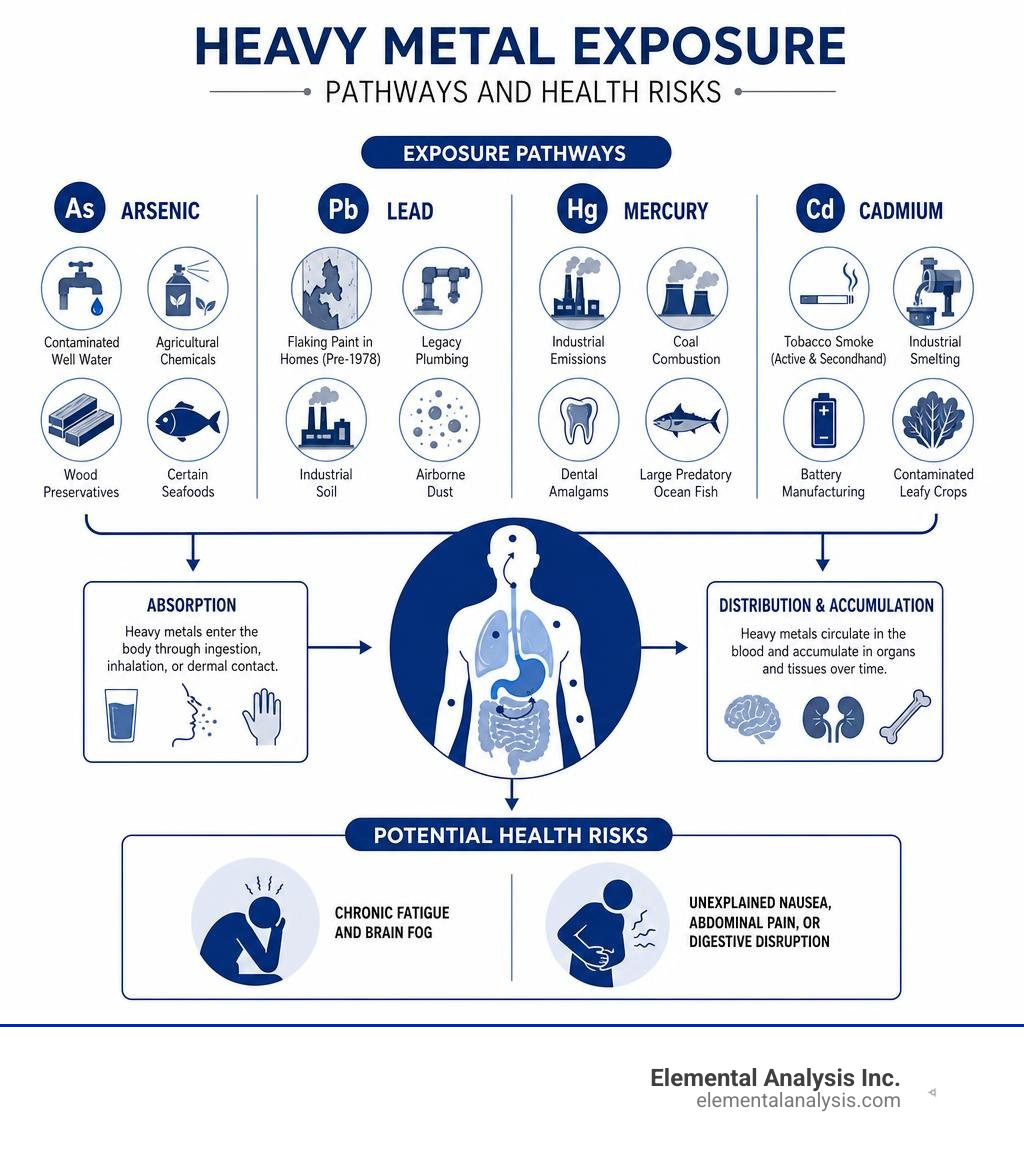
When human tissue or systemic circulation absorbs excessive heavy metals, non-specific health symptoms can develop. Because symptoms overlap with many chronic conditions, identifying toxicity without lab testing is nearly impossible.
Common symptoms indicating potential heavy metal toxicity include:
- Chronic fatigue and brain fog
- Unexplained nausea, abdominal pain, or digestive disruption
- Numbness, tingling, or peripheral neuropathy in hands and feet
- Frequent headaches and sudden mood disturbances
- Joint stiffness and muscle weakness
- Cardiac arrhythmias or unexpected blood pressure changes
For a deeper look into systemic health risks, read our article A Deep Dive into Heavy Metals Analysis and Human Health Risks.
Identifying Key Elements in Standard and Expanded Panels
When ordering testing, choosing the right panel ensures you screen for the proper toxicants. Clinical and environmental panels generally fall into two categories:
- Standard Heavy Metals Panel: Typically covers the “big four” toxic elements—arsenic, cadmium, lead, and mercury. Standard direct-to-consumer panels, such as basic offerings, monitor these fundamental hazards.
- Expanded Heavy Metals Panel: Includes the primary four elements plus additional industrial and clinical toxicants like cobalt and thallium.
To better understand the chemical behavior of these elements, review our guide Heavy Metal Chemistry: A Beginner’s Guide to Elemental Analysis of Metals.
Here is a summary of the additional elements checked in expanded testing:
| Element | Primary Sources | Health Significance |
|---|---|---|
| Cobalt | Metal alloys, mining, degraded cobalt-based joint prosthetics | Essential component of vitamin B12, but excessive levels cause cardiac and respiratory toxicity. |
| Thallium | Semiconductor manufacturing, hazardous waste, plant bioaccumulation | Highly toxic heavy metal that interferes with potassium-dependent cellular enzymes. |
Blood vs. Urine Testing Methods at a Heavy Metal Testing Laboratory

Selecting between a blood draw and a urine collection depends entirely on the metal in question and the exposure timeline. A qualified heavy metal testing laboratory utilizes specific sample matrices based on how the body processes each element.
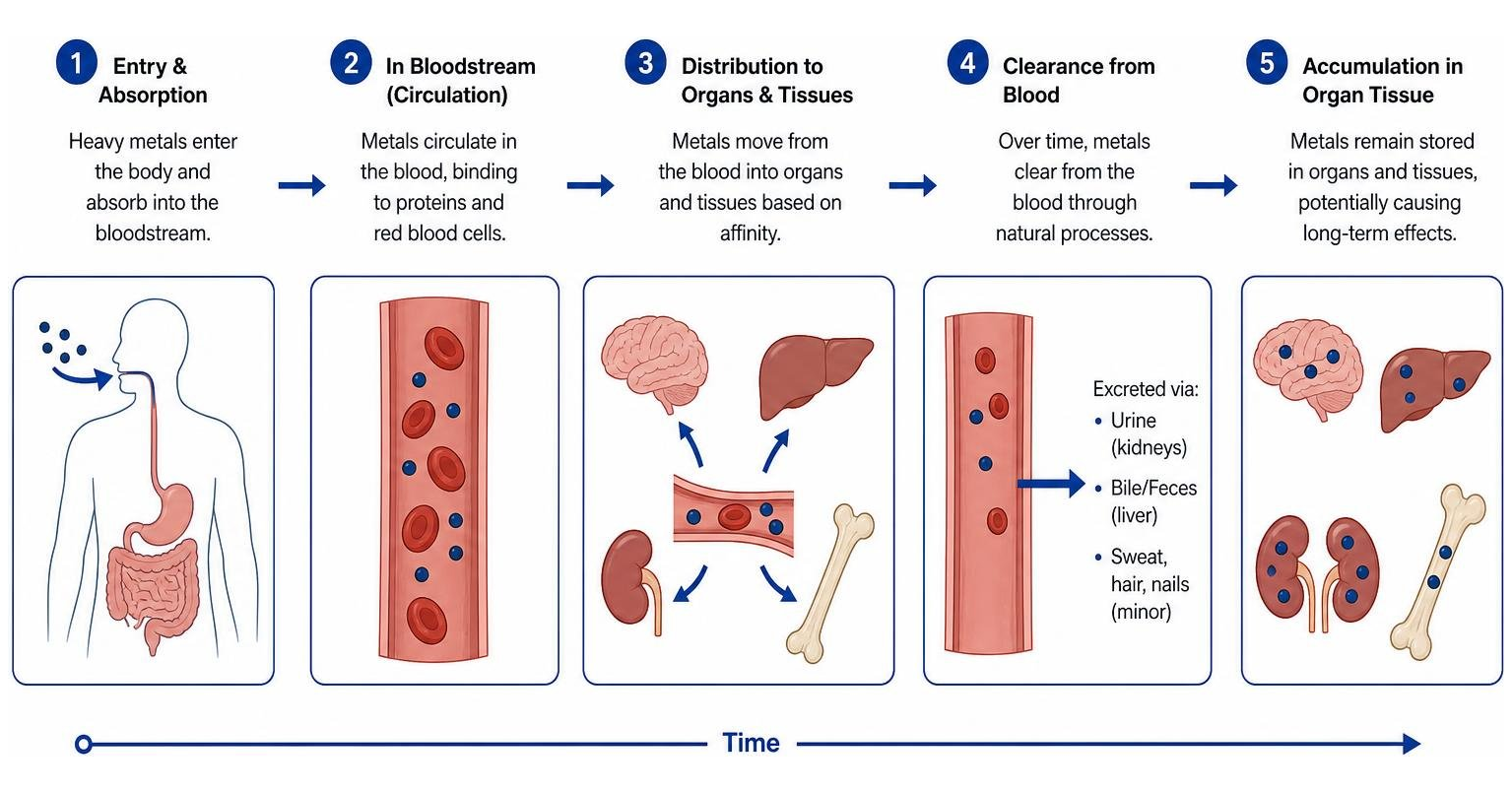
- Blood Testing: Blood analysis reflects recent exposure circulating in the bloodstream. Whole blood is the gold standard for pediatric lead screening and for evaluating organic mercury (methylmercury) acquired from eating ocean fish. However, blood tests can miss historical toxic exposures because elements like lead and cadmium quickly clear the bloodstream and lodge in bone, kidney, or fat tissue.
- Urine Testing: Urine measures how effectively the body excretes heavy metals, reflecting recent or ongoing exposures. It is ideal for measuring inorganic mercury, cadmium, and arsenic. To prevent false readings caused by fluctuating urine concentrations, laboratories use a creatinine correction to balance results against patient hydration status.
| Testing Matrix | Best Used For | Primary Metals Evaluated | Key Advantages |
|---|---|---|---|
| Whole Blood | Acute exposures; pediatric screening; organic compounds | Lead, Organic Mercury (Methylmercury) | Direct measure of circulating systemic burden; standard clinical benchmark. |
| 24-Hour or First-Morning Urine | Excretion monitoring; ongoing industrial exposure | Inorganic Mercury, Cadmium, Arsenic, Cobalt, Thallium | Non-invasive collection; creatinine-adjusted; monitors renal clearance. |
For a complete look at pediatric screening, read our detailed article Heavy Metal Blues: Why Blood Lead Testing Is Crucial for Kids.
Evaluating Analytical Instrumentation Used by a Heavy Metal Testing Laboratory
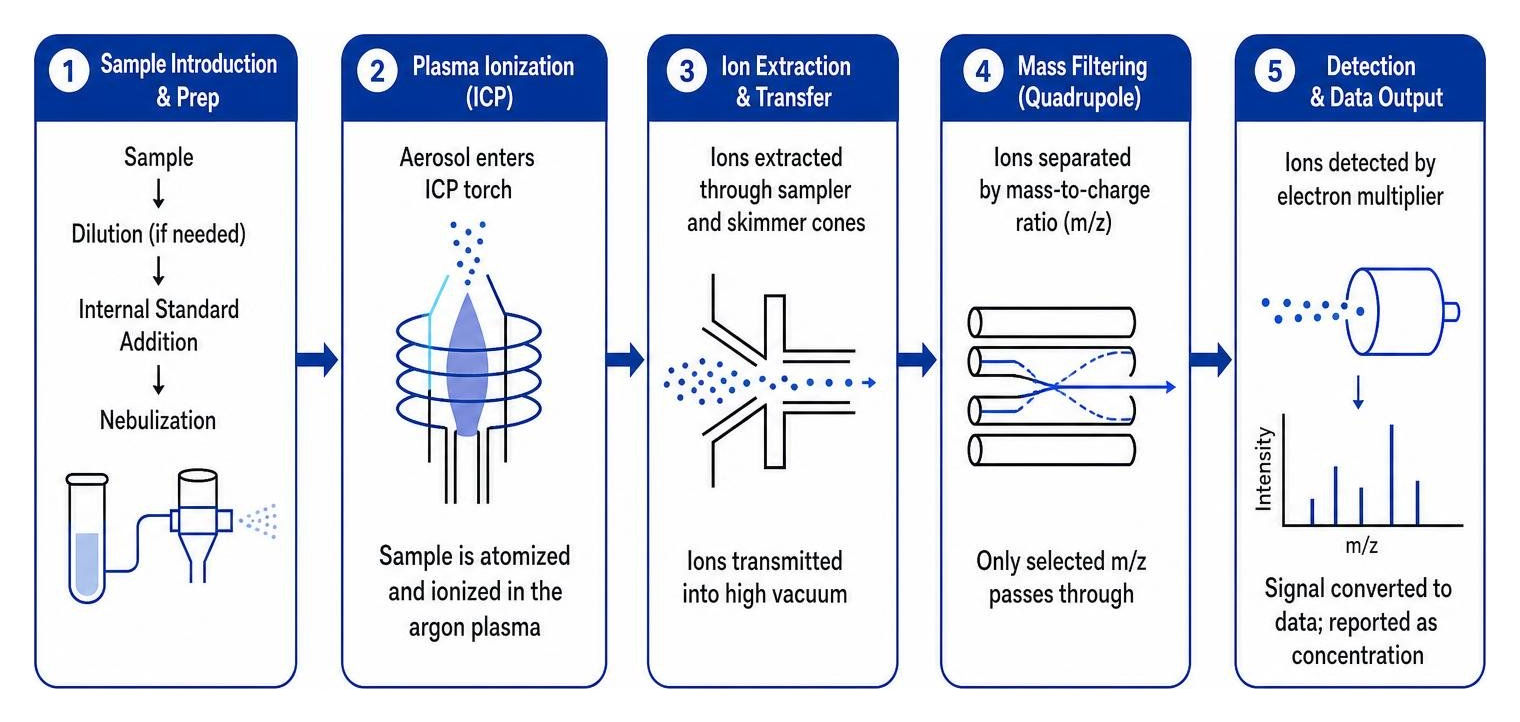
The reliability of your test results depends on the instrumentation used by the heavy metal testing laboratory. Modern commercial facilities rely on several primary analytical techniques:
- ICP-MS (Inductively Coupled Plasma Mass Spectrometry): The benchmark technique for trace element testing. ICP-MS offers ultra-low detection limits (parts per trillion), making it ideal for clinical toxicology, pharmaceutical testing, and high-purity industrial quality control.
- ICP-OES (Inductively Coupled Plasma Optical Emission Spectrometry): Excellent for high-concentration matrices, environmental water samples, and geological testing where extreme sub-ppb sensitivity is not required.
- AAS (Atomic Absorption Spectroscopy): A traditional, highly accurate technique used for single-element analysis, such as standalone blood lead or copper testing.
- PIXE (Proton-Induced X-ray Emission): An advanced ion-beam technique capable of non-destructive multi-element analysis across solid surfaces, thin films, and delicate industrial components.
In addition to elemental identification, top-tier laboratories offer speciation analysis. For example, when total arsenic levels are elevated in a urine sample, automated reflex speciation differentiates harmful inorganic arsenic from harmless organic arsenic (arsenobetaine) derived from dietary seafood.
To understand how to select the best method for your needs, review our guide on ICP Analysis for Heavy Metals: Choosing Between ICP-OES and ICP-MS.
How to Prepare for and Complete the Testing Process

Accurate results require strict adherence to pre-test preparations:
- Seafood Restriction: Patients must avoid consuming all fish, shellfish, and seaweed for 48 to 72 hours before collecting blood or urine samples. Seafood naturally contains high levels of organic mercury and arsenobetaine, which cause false positive spikes in heavy metal screens.
- Red Wine Avoidance: Some urine panels require avoiding red wine for 72 hours due to trace mineral interference.
- Hydration Rules: Maintain normal fluid intake. Over-hydrating dilutes urine samples and distorts creatinine normalization, while severe dehydration can artificially concentrate trace elements.
If you are curious about how aquatic life accumulates these elements, check out our guide on How Heavy Metals Are Tested in Seafood and Fish.
Direct Purchasing and Eligibility
Direct-to-consumer options allow adults aged 18 to 100 to order tests without an initial doctor visit. Testing options include self-pay basic 4-metal panels starting around $120 to expanded panels ranging up to $269. Turnaround times typically range from 3 to 10 business days after the lab receives the sample, with results securely delivered through online portals.
(Note: State regulations vary. Direct-to-consumer collection may be restricted in states like AZ, HI, NY, and PR, requiring patients to work through a licensed local healthcare provider.)
Selecting an Accredited Heavy Metal Testing Laboratory for Water, Soil, and Clinical Samples
When choosing a heavy metal testing laboratory, confirm their accreditations match your sample type:
- Clinical Testing: Verify that the lab is CLIA-certified and CAP-accredited.
- Environmental & Industrial Samples: Look for ISO/IEC 17025 accreditation, state environmental certifications, and adherence to EPA methods for drinking water and soil matrices.
If you suspect contamination around your home or facility, explore local environmental services such as Soil Testing – Division of Regulatory Services – University of Kentucky, or read our resource on Testing the Waters: A Complete Guide to the Analysis of Heavy Metals in Water.
Interpreting Test Results and Next Steps

Receiving your laboratory report is the first step toward understanding your exposure. Test reports compare your quantitative numbers against established population reference ranges or regulatory thresholds.
- Normal Results: Levels fall within typical baseline limits. However, if systemic symptoms persist after a normal blood test, your physician may order secondary tissue or urine testing to rule out sequestered toxic buildup.
- Elevated Results: Levels exceed standard reference thresholds. Elevated total arsenic often triggers automated reflex speciation testing to rule out harmless seafood compounds.
If true toxicity is confirmed, next steps include:
- Source Identification: Finding and eliminating the exposure pathway (e.g., repairing lead paint, changing plumbing, filtering drinking water, or fixing workplace exposure).
- Medical Evaluation: Consulting a toxicologist or qualified healthcare provider. Severe clinical toxicities may require medical supervision or chelation therapy to help clear heavy metals from the body.
For regulatory compliance standards in manufacturing and products, review A Practical Guide to Elemental Impurities Testing and FDA Guidelines.
Frequently Asked Questions About Heavy Metal Testing
How should I prepare for a heavy metal test?
Avoid eating any fish, shellfish, or seafood products for 48 to 72 hours before collecting your sample. Seafood naturally contains non-toxic organic forms of mercury and arsenic that cause false elevations on lab screens. Maintain normal fluid intake so your urine sample is neither overly diluted nor concentrated.
Who is eligible to purchase a heavy metal test directly?
Adults aged 18 to 100 can purchase direct-to-consumer tests out-of-pocket using self-pay options or HSA/FSA funds (subject to plan rules). These direct purchases are not billable to health insurance. Additionally, state restrictions prohibit direct consumer ordering in certain regions (such as NY, AZ, HI, and PR), where a licensed healthcare provider must order the test.
How long does it take to get laboratory results back?
Turnaround times vary by panel complexity and laboratory workflow. Standard 4-metal screens usually take 3 to 9 business days, while expanded 6-metal panels take approximately 7 to 10 business days from the time the sample reaches the lab. Results are typically delivered through secure digital patient portals.
Conclusion
Choosing the right heavy metal testing laboratory requires matching your sample type—whether clinical blood/urine, environmental water and soil, or manufacturing raw materials—with the appropriate testing technology and sensitivity thresholds. From simple 4-element screens to expanded panels covering cobalt and thallium, precise elemental data provides the clarity needed to protect human health and ensure regulatory compliance.
At Elemental Analysis Inc., based in Lexington, Kentucky, we deliver specialized analytical chemistry services backed by fast turnaround times and competitive pricing. As the premier commercial PIXE laboratory, we offer both non-destructive and destructive testing capabilities—including ICP-MS, ICP-OES, and ion-beam analysis—to handle complex elemental challenges across industries.
Ready to secure precise trace element data? Explore our Comprehensive ICP Heavy Metal Testing Services to connect with our expert team today!