
When to Test Drinking Water for Heavy Metals
If you suspect heavy metals in your drinking water, request a lab test for the specific metals of concern. Ask the lab for its sample bottles and collection instructions before taking a sample. For lead from plumbing, the lab may ask for a first-draw sample taken after water has sat in the pipes. A different collection method may be needed for other concerns.
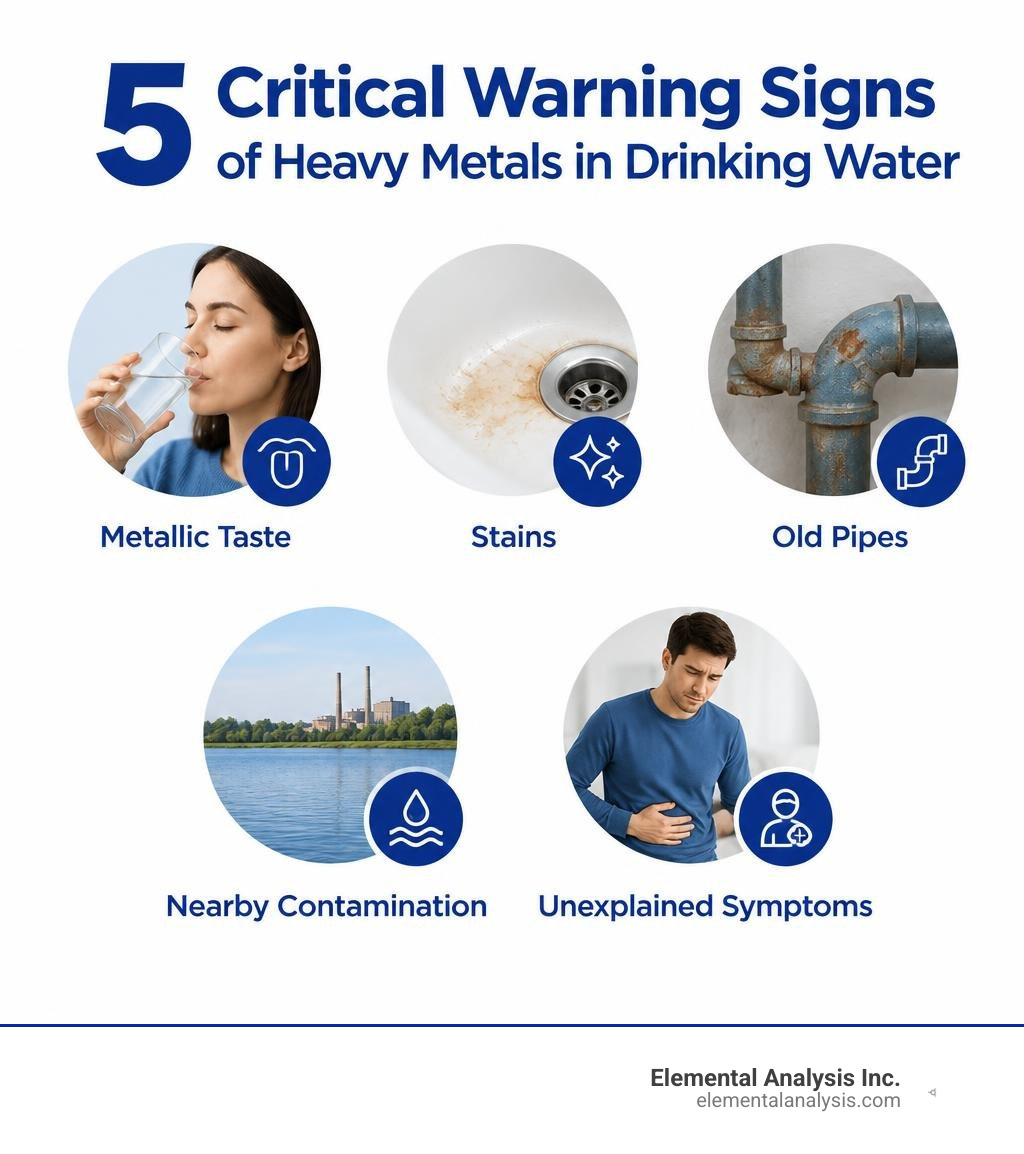
Test promptly if you notice a metallic taste or stained fixtures, have older or corroded plumbing, live near a possible contamination source, or have unexplained symptoms you think may be linked to your water. Clear water is not proof that it is safe: lead and arsenic may have no noticeable taste or color. A lab result can tell you which metals are present and at what levels.
Basic water testing heavy metals vocab:
5 Critical Warning Signs of Heavy Metals in Drinking Water
Heavy metals in drinking water pose severe chronic risks because they are invisible, odorless, and bioaccumulative. While pristine-looking water can harbor dangerous concentrations of neurotoxins, our plumbing systems and senses often provide subtle physical contamination indicators before acute poisoning occurs.
Understanding the subtle physical changes in your water—along with the environmental and structural vulnerabilities of your property—is the first line of defense against long-term toxic exposure. Below, we break down the five most critical warning signs that demand immediate laboratory verification.
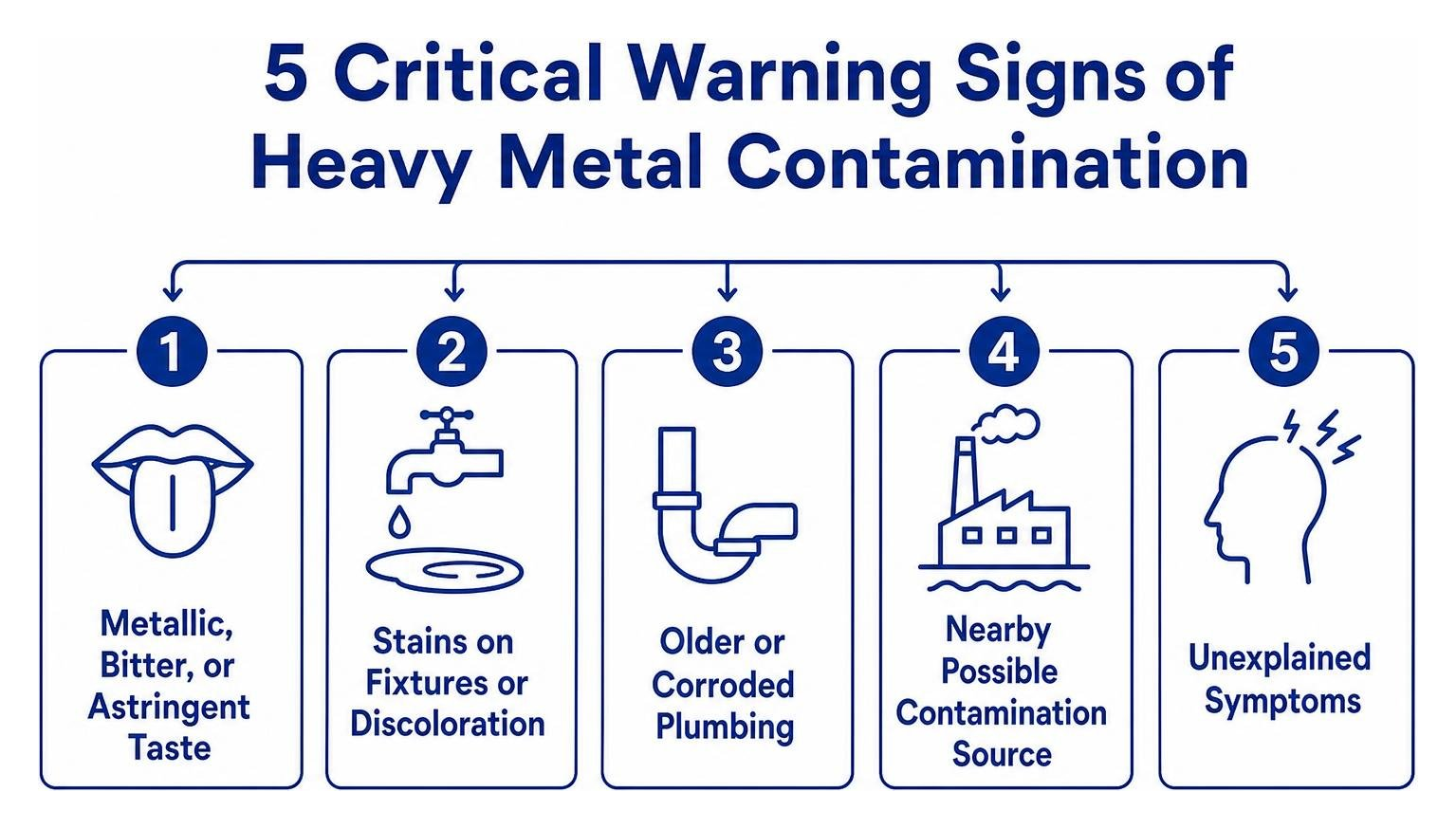
1. Metallic, Bitter, or Astringent Taste
If your morning glass of water leaves a sharp, penny-like, or bitter taste on your tongue, take note. While water should be neutral and refreshing, high concentrations of dissolved minerals alter its flavor profile past specific taste thresholds:
- Dissolved Copper: Imparts a distinctly bitter, metallic taste even at low concentrations, often irritating the mouth.
- Zinc Leaching: Causes an astringent, dry mouthfeel, frequently accompanied by an unappealing metallic aftertaste.
- High Iron Concentrations: Leaves a strong, blood-like or rusty flavor that lingers on the palate.
While the EPA categorizes iron, copper, and zinc under aesthetic secondary drinking water standards when it comes to minor taste and odor variations, elevated levels often indicate active pipe corrosion that leaches far more dangerous, tasteless contaminants into your supply.
2. Discolored Water and Stained Fixtures
Heavy metals leave tangible chemical signatures on porcelain, stainless steel, and laundry. Discoloration indicates active chemical oxidation:
- Blue-Green Staining: Visible around faucet bases, shower drains, and toilet bowls, this classic sign points directly to copper leaching caused by acidic water degrading your plumbing lines.
- Reddish-Brown or Orange Scale: Characteristic of oxidized iron deposits settling out of the water supply.
- Black or Dark Brown Deposits: Often indicates elevated manganese or localized chemical reactions.
- Gray or Black Particulates: Can signal lead precipitate sloughing off deteriorating internal pipe walls.
When these physical stains appear, relying on visual inspection alone is insufficient. Quantitative analysis is required to identify the exact elemental concentrations in your system.
3. Aging Plumbing and Corroded Service Lines
The architectural era of your home provides critical insight into your toxic exposure risks. Homes constructed before the 1986 Safe Drinking Water Act amendments routinely utilized plumbing components containing high percentages of lead:
- Lead Solder: Used to join copper piping until federally banned in 1986.
- Galvanized Steel Pipes: Older zinc-coated iron pipes accumulate lead deposits over decades; as they corrode, they release lead and cadmium.
- Brass Fixtures: Pre-2014 brass faucets and fittings may contain up to 8% lead by weight while still carrying a “lead-free” label from older regulatory periods.
- Municipal Utility Lead Service Lines: The underground pipes connecting municipal water mains to older residences often remain a hidden source of high-volume lead contamination.
Galvanic corrosion accelerates when dissimilar metals touch, creating microscopic electrical currents that drive heavy metals directly into stagnant drinking water.
4. Proximity to Industrial Sites, Mining, or Agricultural Runoff
Even modern plumbing cannot protect your drinking water if your underlying source is compromised. If your home relies on a private groundwater well or surface intake near commercial zones, external environmental contamination is a significant risk:
- Industrial Discharges: Facilities involved in metal fabrication, electronics manufacturing, or chemical processing can release toxic runoff containing cadmium, hexavalent chromium, and nickel.
- Mining Operations and Coal Ash Ponds: Weathering mine tailings and coal combustion residuals allow arsenic, lead, and selenium to migrate into aquifers.
- Agricultural Runoff: Excessive pesticide applications and phosphate fertilizers contribute trace heavy metals and nitrates to regional groundwater.
Homeowners utilizing private groundwater systems should regularly cross-reference their location with state groundwater quality records to stay informed of regional aquifer contamination risks.
5. Unexplained Chronic Health Symptoms
The most urgent warning sign of heavy metal exposure is the emergence of chronic, unexplained medical issues within a household. Toxic metals bioaccumulate in vital organs, interfering with cellular function over months or years.
To understand the biological mechanisms behind chronic exposure, reviewing the human health risks of heavy metal exposure reveals why heavy metals must be identified quickly.
If multiple household members experience overlapping symptoms without an obvious medical cause, immediate drinking water verification is essential.
Key Heavy Metals to Screen in Drinking Water
Federal regulatory frameworks establish strict guidelines to protect public health. The EPA sets enforceable Maximum Contaminant Levels (MCLs) alongside health-based Maximum Contaminant Level Goals (MCLGs), which represent the exposure level where no known adverse health effects occur.

Lead, Copper, and Arsenic Risks
- Lead (Pb): The EPA has set an MCLG of zero for lead because no safe level of exposure has been established in children. The federal Action Level is 15 parts per billion (ppb); exceeding this threshold requires mandatory utility remediation.
- Copper (Cu): The current regulatory action level stands at 1.3 parts per million (ppm). While copper is an essential dietary trace mineral, high concentrations in water cause immediate gastrointestinal distress and long-term renal toxicity.
- Arsenic (As): Common in bedrock aquifers, arsenic is governed by an MCL of 10 ppb (0.010 mg/L). Chronic ingestion of this toxic metalloid contributes to cardiovascular disease and various internal cancers.
Mercury, Cadmium, and Chromium Threats
- Inorganic Mercury (Hg): Regulated with an MCL of 2 ppb, mercury enters water through industrial releases and atmospheric deposition, targeting the neurological and renal systems.
- Cadmium (Cd): Governed by an MCL of 5 ppb, cadmium leaches from galvanized pipes and industrial runoff, accumulating in the kidney cortex.
- Chromium (Cr): Total chromium is federally limited to 100 ppb. However, health specialists frequently evaluate hexavalent chromium separately due to its potent carcinogenic properties at lower concentrations.
Choosing the Right Method for Water Testing Heavy Metals
Selecting an appropriate analytical strategy depends on your water source, specific contamination risks, and required detection limits. While retail stores offer consumer-grade tests, their analytical limitations must be carefully weighed against certified laboratory methodologies.
For an exhaustive evaluation of available methodologies, consult our guide to comprehensive heavy metals testing options.
At-Home Kits vs. Laboratory Water Testing for Heavy Metals
At-home testing strips provide rapid, qualitative screening through colorimetric paper reactions. However, these strips often feature high detection thresholds (such as 15–50 ppb for lead), meaning a “negative” strip can easily miss dangerous sub-threshold concentrations that still cause long-term health issues. For precise, quantitative results, professional water testing for heavy metals is the more reliable approach.
For a comprehensive breakdown of these trade-offs, explore our detailed comparison between test kits and lab analysis.
| Feature / Metric | At-Home Test Strips | Mail-In Lab Test Kits | Certified Analytical Laboratory |
|---|---|---|---|
| Typical Cost | $15 – $40 | $120 – $300 | $150 – $400+ |
| Turnaround Time | 1 – 15 minutes | 5 – 10 business days | 3 – 5 business days |
| Analytes Screened | 5 – 20 broad parameters | 10 – 110 analytes | Targeted or Comprehensive Panels |
| Detection Limits | Semi-quantitative (ppm / high ppb) | Parts per billion (ppb) | Sub-ppb to parts per trillion (ppt) |
| Accuracy & Precision | Low to Moderate (User-dependent) | High (EPA-aligned) | Exceptional (Regulated QA/QC) |
| Interference Susceptibility | High (pH, chlorine, hardness skew results) | Low (Sample preservation protocols) | Negligible (Advanced matrix separation) |
PIXE-Based Trace Element Analysis
When accurate detection of trace contaminants is critical, advanced physics-based instrumentation outperforms traditional chemical assays. At Elemental Analysis Inc., we offer trace element identification, quantification, and speciation services across multiple industries. As the first commercial laboratory to offer Proton-Induced X-ray Emission (PIXE), our unique capability provides non-destructive and destructive testing with fast turnaround and competitive pricing.
PIXE bombards a prepared water residue with an accelerated proton beam, causing the constituent atoms to emit characteristic X-rays. This process allows our analysts to quantify dozens of heavy metals simultaneously without chemical spectral interferences, delivering precise elemental profiling down to trace levels.
Step-by-Step Protocol for Collecting Water Samples
Accurate laboratory results depend on proper sample collection. Follow these step-by-step sampling procedures to ensure sample integrity and prevent external cross-contamination:
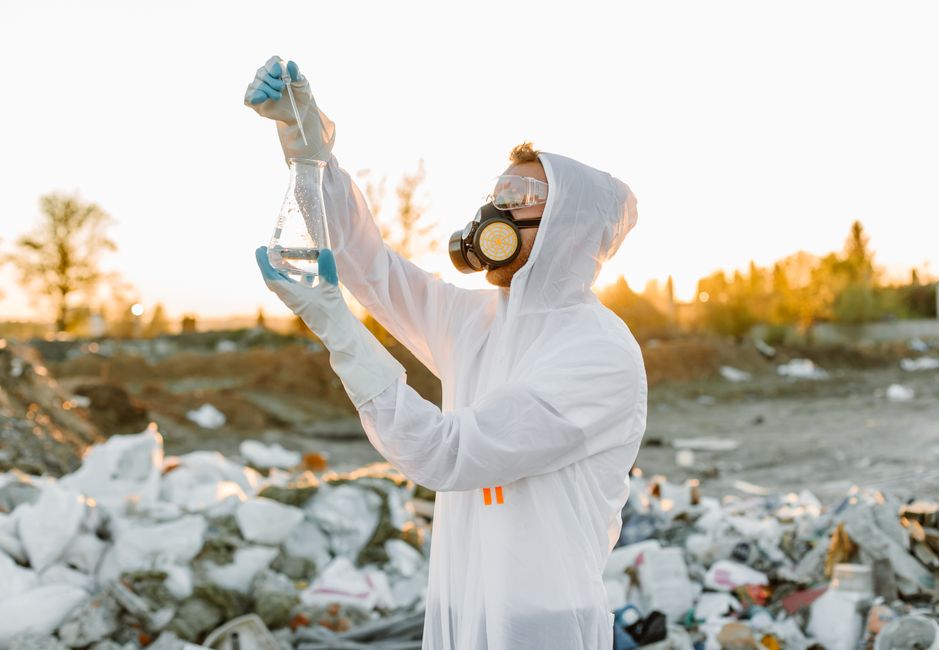
Best Practices in Sample Collection for Water Testing Heavy Metals
- Determine the Sampling Strategy:
- First-Draw Sample: Collect immediately upon waking after the water has sat stagnant in plumbing lines for at least 6 to 8 hours. This isolates metals leaching directly from household pipes, solder, and fixtures.
- Flushed Sample: Run the faucet on cold for 3 to 5 minutes before filling the container. This clears household plumbing to evaluate the incoming municipal or well aquifer baseline.
- Use Certified Lab Containers: Collect samples exclusively in laboratory-supplied, sterile high-density polyethylene (HDPE) or fluoropolymer bottles. Never use domestic food containers, as trace plasticizers and residues compromise analytical integrity.
- Do Not Rinse the Preservative: Many certified metal collection bottles contain a small aliquot of high-purity nitric acid to keep dissolved ions in suspension (maintaining sample pH below 2). Do not rinse this out.
- Avoid Cross-Contamination: Remove aerators, screens, or water purification attachments prior to sampling. Do not touch the inside of the cap or the bottle rim with your fingers.
- Ship Promptly with Chain of Custody: Seal the container tightly, complete the chain-of-custody documentation, and dispatch the package immediately to minimize hold-time discrepancies.
Interpreting Lab Reports and Regulatory Benchmarks
Understanding your laboratory certificate of analysis is straightforward once you know the basic reporting units:
- Micrograms per Liter (µg/L) vs. Milligrams per Liter (mg/L): 1 µg/L is equivalent to 1 part per billion (ppb), while 1 mg/L equals 1 part per million (ppm).
- Reporting Detection Limit (RDL): The lowest concentration the laboratory can reliably quantify. A result marked “< RDL" indicates the metal was not detected above that baseline.
- Primary Drinking Water Standards: Federally enforceable benchmarks established to protect public health. Any parameter exceeding an EPA primary standard or Action Level demands prompt intervention.
Actionable Remediation Steps If Heavy Metals Are Detected
If your certified analytical report confirms elevated heavy metal levels, implement targeted remediation immediately:
- Switch to Certified Point-of-Use (POU) Filtration: Install filtration units certified under NSF/ANSI Standard 53 (health effects) or NSF/ANSI 58 (reverse osmosis systems). High-efficiency reverse osmosis, activated alumina (for arsenic), and specialized ion-exchange resins reliably extract dissolved heavy metal ions.
- Flush Stagnant Plumbing Lines: While arranging filtration, run your cold water tap for 2–3 minutes before using it for drinking or cooking. Never use hot tap water for consumption, as heated water leaches metals from plumbing at accelerated rates.
- Physical Pipe and Fixture Remediation: If first-draw testing reveals extreme lead or copper contamination originating inside the home, work with a licensed plumber to replace older galvanized lines, lead solder joints, and pre-2014 brass fittings.
- Re-test to Verify Remediation: Following any filter installation or plumbing overhaul, submit follow-up samples to an accredited laboratory to confirm that metal concentrations have dropped to safe levels.
Frequently Asked Questions About Water Testing for Heavy Metals
How often should you test tap or private well water for heavy metals?
Private well owners should complete a comprehensive laboratory panel for heavy metals, coliform bacteria, nitrates, and volatile organic compounds at least once per year. Municipal water users should test every 2 to 3 years, or immediately following local infrastructure disruptions, historic plumbing renovations, or noticeable changes in water clarity and taste.
Can boiling water remove heavy metals like lead and arsenic?
No. Boiling water does not remove heavy metals. Because water evaporates as steam while heavy metals remain behind, boiling increases the concentration of toxic metals in the remaining liquid. Boiling is only effective for biological pathogens (bacteria, parasites, viruses), not elemental chemical hazards.
What is the typical cost of testing drinking water for heavy metals?
Consumer-grade DIY test strips cost $15 to $40 but offer low precision and narrow parameter ranges. Professional mail-to-lab screening kits typically range between $120 and $300. Advanced, certified laboratory panels—utilizing high-precision ICP-MS or PIXE trace element quantification—range from $150 to $400+ depending on the number of analytes and speciation depth required.
Conclusion
Guarding your household against toxic drinking water requires proactive screening. Because heavy metals like lead, arsenic, and cadmium can enter water supplies without altering clarity or odor, relying on visual inspection alone leaves your health at risk. Recognizing early warning signs—from subtle metallic tastes and oxidized plumbing stains to older service lines and nearby industrial activities—empowers you to take timely action.
When precise, defensible data is required, Elemental Analysis Inc. delivers world-class trace element quantification. Our certified analytical workflows and unique commercial PIXE capabilities provide non-destructive and destructive testing with fast turnaround and competitive pricing. For a deeper technical look into analytical protocols, read our complete guide to heavy metals water analysis and ensure your drinking water remains pure, clean, and safe.