
How to Start Testing for Metals
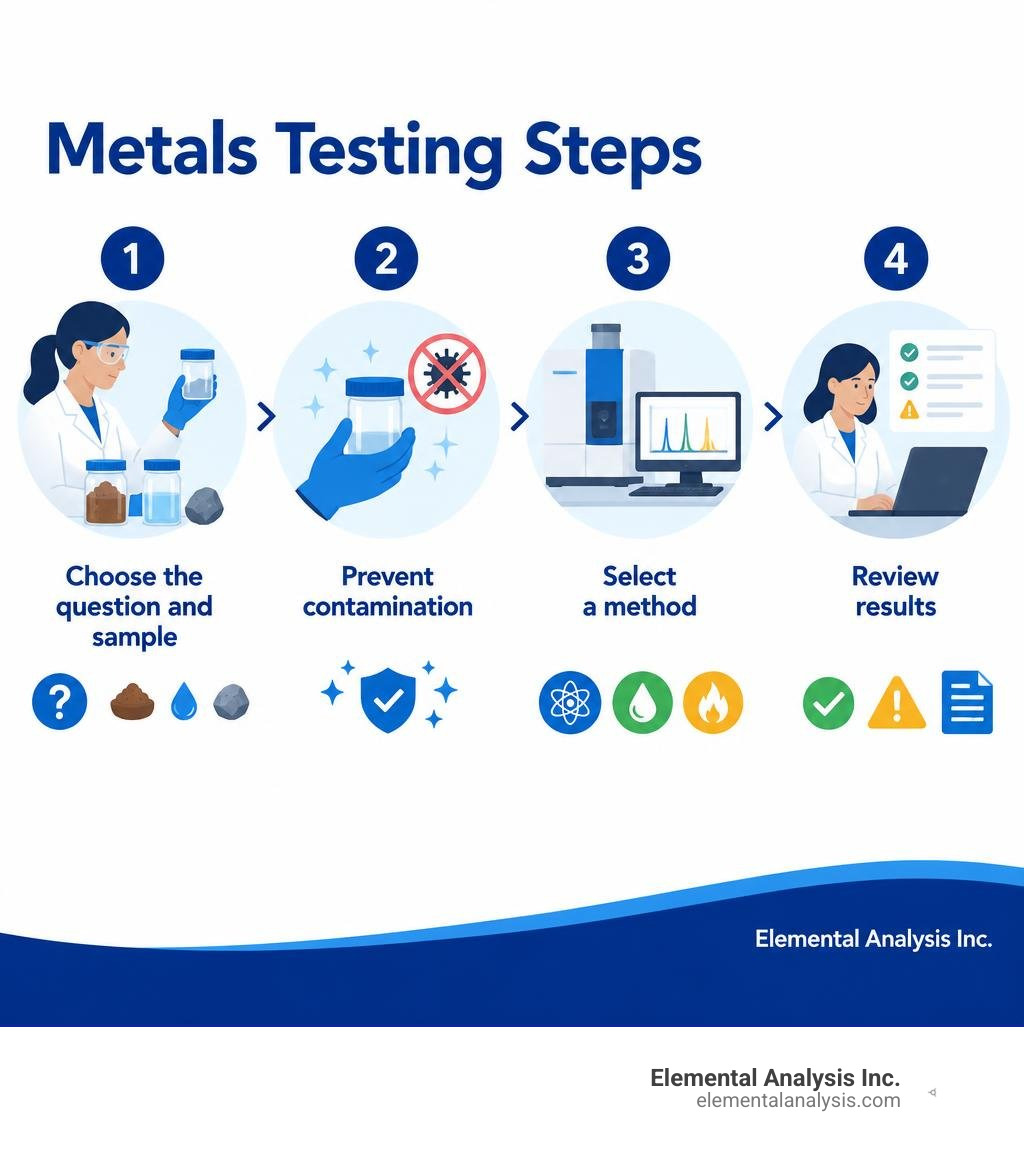
Testing for metals starts with the sample and the question. For a product, soil, or water sample, decide which elements you need to identify, how low the test must measure, and whether the sample can be altered. For a possible health exposure, ask a healthcare provider which metal and biological sample to test; blood and urine answer different questions.
Next, collect the sample without contamination and send it to a lab using a suitable method. Compare the results with the right product standard, environmental limit, or clinical guidance. A high result needs context before you decide what to do next.
The article editor does not render LaTeX. Do not write LaTeX commands or math delimiters in article copy. Explain calculations in plain language, or use an ordinary-text formula when useful, such as watts = volts × amps. Write units as readable text, such as ft³/hour or gallons/kWh. When asked to remove formulas or confusing mathematical notation, replace them with prose; do not substitute different equations or hide the notation in code.
Understanding Heavy Metal Toxicity and High-Risk Exposure Groups
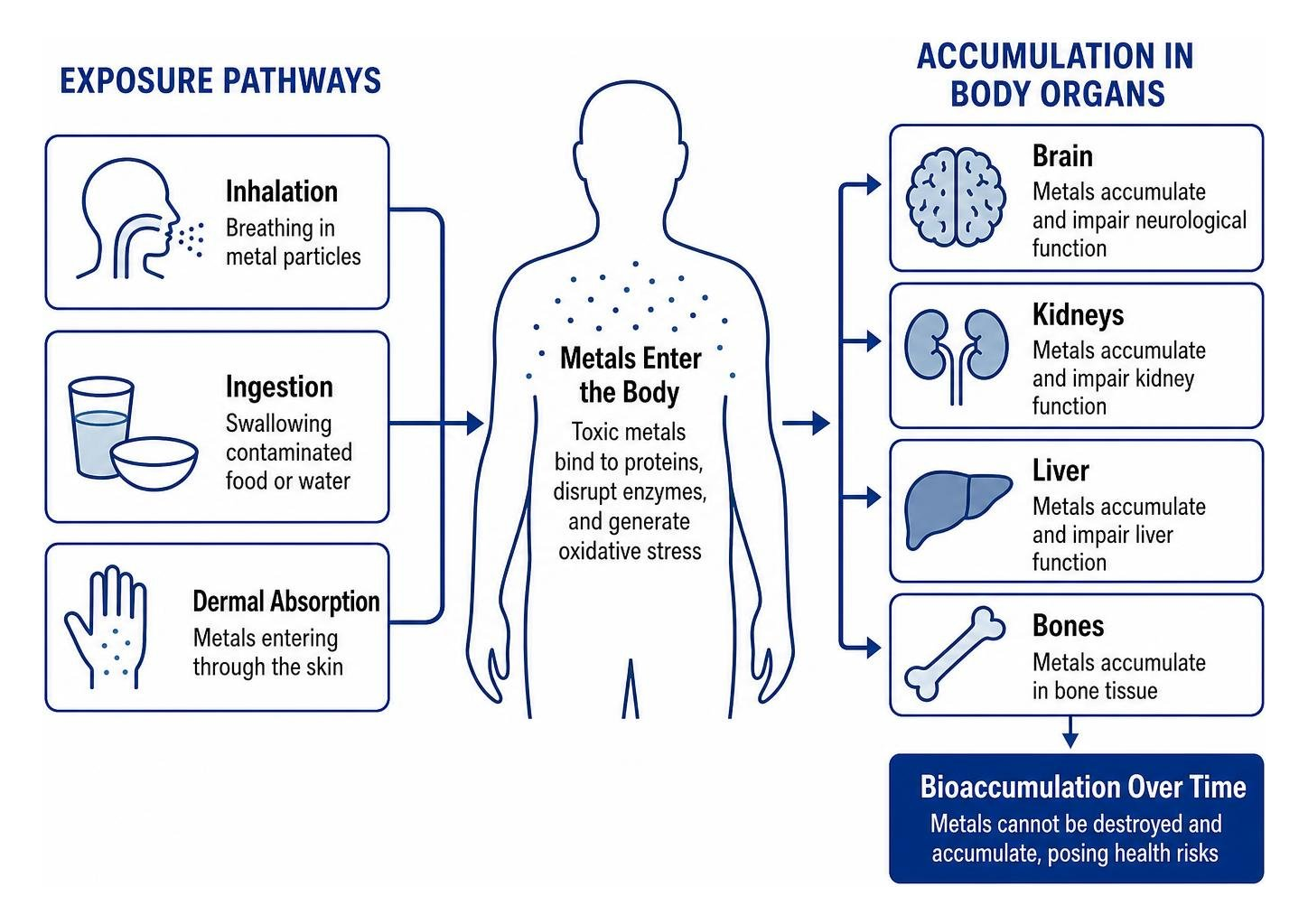
Heavy metals are naturally occurring elements found throughout the Earth’s crust. While our bodies require tiny trace amounts of essential elements like iron, zinc, and selenium to function properly, non-essential metals such as lead, mercury, cadmium, and arsenic serve no biological purpose in humans. When these toxic metals enter the body through inhalation, ingestion, or dermal absorption, they can bind to cellular proteins, disrupt enzymatic processes, and generate damaging oxidative stress.
Unlike organic toxins that the liver can metabolize and break down into harmless byproducts, elemental metals cannot be destroyed. Instead, they accumulate within vital organs—including the brain, kidneys, liver, and bones. Over time, this bioaccumulation poses significant health threats.
Vulnerable populations, especially infants and young children, face the highest risks from toxic metal exposure because their blood-brain barriers are still developing and their metabolic rates are higher. For instance, the Centers for Disease Control and Prevention (CDC) uses a blood lead reference level of 5 micrograms per deciliter (5 µg/dL) to identify children with elevated exposure. However, medical research shows that adverse cognitive and behavioral effects occur even at levels below 5 µg/dL. Because childhood exposure often stems from peeling lead-based paint and dust in pre-1978 housing, proactive blood lead testing is crucial for kids who live in or frequently visit older structures.
Common Signs and Symptoms of Metal Poisoning
The clinical manifestations of heavy metal toxicity vary depending on the specific element, whether the exposure is acute or chronic, and individual susceptibility. Because symptoms often mirror routine gastrointestinal complaints or chronic fatigue, metal toxicity is frequently overlooked during routine medical visits.
- Acute Poisoning Symptoms: Rapid ingestion or inhalation of high concentrations of metals typically triggers acute nausea, vomiting, severe abdominal pain, diarrhea, chills, chest tightness, and shortness of breath.
- Chronic Poisoning Symptoms: Prolonged, low-dose exposure tends to present insidiously. Common indicators include persistent brain fog, memory impairment, chronic fatigue, unexplained muscle weakness, headaches, and peripheral neuropathy (often experienced as numbness, tingling, or a “pins and needles” sensation in the hands and feet).
- Organ-Specific Dysfunction: Chronic accumulation can lead to kidney damage, anemia, elevated blood pressure, and tremors.
Understanding these diverse human health risks allows individuals and medical professionals to identify potential toxic exposure early before irreversible tissue damage takes place.
High-Risk Occupations and Environmental Vectors
Certain vocations and lifestyle factors dramatically increase the likelihood of heavy metal toxicity:
- Industrial and Trades Work: Workers in smelting, battery manufacturing, scrap metal recycling, welding, commercial construction, plumbing, and stained glass artistry encounter airborne metal fumes and dust daily. In industrial settings, strict adherence to workplace safety regulations and regular biomonitoring are essential. For example, airborne cadmium exposure is extremely dangerous; estimates suggest that an 8-hour exposure to 5 grams of cadmium per cubic meter of air can be lethal.
- Older Residential Infrastructure: Homes constructed prior to the 1978 ban on residential lead paint remain primary sources of lead exposure via deteriorating paint chips and contaminated household dust. Additionally, legacy lead and copper plumbing can leach metals directly into domestic tap water.
- Dietary Sources and Water Supplies: Unregulated private well water can contain high levels of inorganic arsenic and lead leached from natural rock formations. In our diet, frequent consumption of long-lived predatory fish (such as swordfish, king mackerel, shark, and tilefish) is the leading cause of elevated methylmercury levels in adults.
Biological Sample Selection and Analytical Procedures When Testing for Metals
Choosing the correct biological sample is the most critical decision when testing for metals. Because toxic metals clear from the bloodstream and distribute into body tissues at differing rates, no single specimen type can detect every type of exposure.
| Specimen Matrix | Primary Diagnostic Window | Best Suited For | Key Advantages | Analytical Limitations |
|---|---|---|---|---|
| Whole Blood | Acute to recent exposure (days to weeks) | Lead, methylmercury, cadmium, acute arsenic | Direct measure of active circulating burden; well-established reference limits | Metals clear quickly into tissues; reflects recent rather than historic lifetime exposure |
| Urine (24-Hour or Spot) | Recent to intermediate exposure (days to months) | Inorganic arsenic, inorganic mercury, cadmium, cobalt, thallium | Excellent for assessing renal clearance and inorganic forms; non-invasive collection | Requires creatinine adjustment to correct for hydration levels; inconvenient 24-hr collection |
| Hair & Fingernails | Long-term chronic exposure (months to years) | Arsenic, methylmercury, chronic lead/cadmium | Non-invasive; stable record of historic deposition over past 3 to 4 months | High risk of external contamination from dyes, perms, bleaches, and medicated shampoos |
| Tissue Biopsy | Long-term / organ storage | Specialized cases (e.g., liver/kidney pathology) | Direct confirmation of deep organ burden | Highly invasive surgical procedure; rarely used for standard screening |
Blood, Urine, and Hair Specimen Protocols
To obtain accurate results, laboratories follow strict collection protocols designed to avoid sample contamination:
- Whole Blood Testing: Blood draws must use certified, trace-element-free collection tubes (typically royal blue top tubes containing EDTA anticoagulant). Whole blood reflects active circulating exposure. Standardized methods, such as the CDC multi-element blood laboratory procedures, allow for the simultaneous detection and quantification of cadmium, lead, mercury, manganese, and selenium in blood samples.
- Urine Testing: Urine is the preferred matrix for monitoring cadmium and inorganic forms of mercury and arsenic. Because urine concentration varies based on daily fluid intake, professional laboratories measure and normalize results against urinary creatinine. A 24-hour urine collection provides the most complete diagnostic picture of daily excretion, although spot urine tests with creatinine correction are commonly used in commercial panels.
- Hair and Nail Testing: Scalp hair grows at an average rate of approximately 1 centimeter per month. A 3-to-4 centimeter sample taken near the root provides an elemental timeline of the preceding 3 to 4 months. Hair binds circulating trace minerals and toxic elements into its keratin matrix at concentrations up to 300 times higher than those found in serum or urine. However, external treatments such as hair coloring, bleaching, and anti-dandruff shampoos containing selenium or zinc must be avoided for 8 to 10 weeks prior to collection to prevent false positives.
Evaluating Acute vs. Chronic Exposure When Testing for Metals
Understanding the toxicokinetics—how the body absorbs, distributes, and eliminates elements—is crucial when evaluating your heavy metals testing options.
- Acute Exposure: When a high-dose exposure occurs over a short period, circulating blood levels spike rapidly. For example, blood lead concentrations peak 4 to 5 hours after ingestion or inhalation. Because the excretory half-life of lead in whole blood is roughly 28 to 30 days, a blood test will reliably capture this recent event. Similarly, if exposure to mercury stops, blood levels of most forms decrease by half approximately every three days.
- Chronic Exposure: Over time, unexcreted metals migrate from the bloodstream and deposit into target tissues. Lead incorporates into the mineral matrix of bones, where it can remain stored for decades before slowly leaching back into the blood during periods of bone turnover (such as pregnancy, lactation, or osteoporosis). Cadmium concentrates primarily within the renal cortex, exhibiting a biological half-life of 10 to 30 years. Consequently, someone with significant past exposure might display normal blood levels while maintaining a high overall body burden that is detectable only through specialized urine or hair analysis.
Advanced Laboratory Methodologies: PIXE and Elemental Analysis
At Elemental Analysis Inc., we operate out of our laboratory facilities in Lexington, Kentucky, bringing specialized analytical chemistry directly to complex elemental challenges. As the first commercial laboratory to offer Proton-Induced X-ray Emission (PIXE), we provide non-destructive testing capabilities alongside established methods like Inductively Coupled Plasma Mass Spectrometry (ICP-MS).
While destructive techniques require dissolving the sample in strong acids at high temperatures, PIXE allows solid materials, environmental filters, archaeological artifacts, and biological specimens to be analyzed without destroying the sample matrix. By irradiating the sample with an ion beam and measuring the characteristic X-rays emitted by each element, we deliver rapid identification, quantification, and speciation across the periodic table. Exploring the fundamentals of elemental analysis of metals helps highlight how modern spectrometry isolates trace contaminants at parts-per-billion (ppb) sensitivities.
Preparation Guidelines and Test Administration
Step-by-Step Guidelines: How to Prepare Before Testing for Metals

Proper pre-test preparation prevents false-positive results and saves you the frustration and expense of having to retest.
- Strict Seafood Elimination (48 to 72 Hours Prior): Many marine organisms naturally accumulate non-toxic organic forms of arsenic (such as arsenobetaine, often nicknamed “fish arsenic”) and organic methylmercury. Consuming fish, shellfish, or seaweed within 48 to 72 hours of your appointment will artificially inflate your total blood mercury and total urinary arsenic numbers. To ensure diagnostic accuracy, avoid all seafood for at least two full days before sample collection. Understanding how arsenic and mercury testing in seafood is conducted illustrates why dietary washout periods are essential for human clinical panels.
- Radiographic Contrast Agent Washout (96 Hours Prior): Medical imaging procedures often use contrast media containing gadolinium, barium, or iodine. These heavy elements clear through the kidneys and will severely interfere with mass spectrometry instruments, producing massive false-positive spikes. Ensure at least 96 hours (4 days) elapse between any contrast-enhanced scan (such as an MRI or CT) and your metal test collection.
- Red Wine and Supplement Avoidance: Avoid drinking red wine for 72 hours before testing, as grape skins can absorb and concentrate trace soil minerals. Additionally, pause non-essential dietary mineral supplements (such as zinc, copper, or iron formulations) for 24 to 48 hours beforehand unless your physician directs otherwise.
Sample Collection and Laboratory Analysis
Whether providing a sample at a clinic or collecting it through a prescribed home protocol, avoiding sample contamination is critical:
- Contamination Control: Wash your hands thoroughly before handling specimen cups or hair shears. Use only the certified, acid-washed, metal-free containers provided with your testing kit. Never let the collection surface touch faucet spouts or countertops.
- Laboratory Quality Control: Accredited laboratories run analytical blanks, calibration standards, and matrix spikes alongside clinical specimens to confirm that reagents and tubing introduce zero background contamination.
- Turnaround Timelines: Standard heavy metal blood and urine panels typically take between 2 and 5 business days for routine processing. Expanded panels that evaluate six or more elements (such as lead, mercury, arsenic, cadmium, cobalt, and thallium) or require elemental speciation generally take 7 to 10 business days. Selecting a professional heavy metal testing laboratory ensures that your specimens are processed using validated analytical methods and strict quality controls.
Interpreting Test Results and Medical Next Steps
A heavy metal lab report provides your quantitative concentration alongside an established reference interval. These intervals represent expected baseline levels derived from broad population studies, such as the National Health and Nutrition Examination Survey (NHANES).
It is important to remember that finding a detectable trace of a metal is not automatically a sign of poisoning. Because heavy metals exist naturally in our environment, almost every human carries measurable trace levels. Toxicity depends on the specific concentration, the chemical form of the metal, and whether clinical symptoms are present.
Clinical Thresholds and Reference Ranges
- Lead: There is no known safe blood lead level in children. For pediatric screening, levels at or above 5 µg/dL trigger environmental investigation and monitoring. In healthy unexposed adults, blood lead concentrations are typically well below 5 µg/dL; sustained levels above this mark in adults are linked to elevated risks of hypertension and renal strain.
- Cadmium: In healthy, unexposed non-smokers, blood cadmium concentrations generally range from 0.1 to 4 µg/L. Because tobacco leaves absorb cadmium from soil, regular cigarette smokers frequently exhibit baseline cadmium levels twice as high as non-smokers.
- Mercury: For total blood mercury, concentrations below 5 µg/L are generally considered standard for individuals who do not consume large amounts of seafood. Clinical symptoms of neurotoxicity (such as tremors or ataxia) typically begin appearing at blood concentrations between 10 and 20 µg/L or higher.
- Arsenic: If a total urinary arsenic screen returns elevated, the laboratory must perform arsenic speciation. Speciation separates non-toxic organic compounds derived from food (like arsenobetaine) from harmful inorganic forms (arsenite and arsenate) associated with contaminated well water and industrial exposure.
Medical Interventions and Chelation Therapy
When a laboratory panel confirms elevated heavy metal levels, medical treatment follows a structured clinical pathway:
- Immediate Exposure Cessation: The first and most essential step is identifying and eliminating the source of exposure. This may involve switching to certified water filtration, undergoing professional lead paint abatement, making dietary changes, or improving occupational protective equipment (PPE). For subclinical elevations, removing the exposure source is often all that is needed to allow the body’s natural liver and kidney pathways to clear the metal over time.
- Nutritional and Antioxidant Support: Under medical supervision, patients often support their natural detoxification pathways with targeted nutrients like N-acetylcysteine (NAC) and liposomal glutathione, along with essential minerals like selenium, which binds mercury and helps reduce its neurotoxicity.
- Prescription Chelation Therapy: Chelation involves administering specialized chemical agents—such as Dimercaptosuccinic acid (DMSA), Dimercaptopropanesulfonate (DMPS), or Calcium Disodium EDTA—that bind to heavy metal ions in the bloodstream, forming stable, water-soluble complexes that are excreted in urine.
Important Clinical Caution: Medical toxicologists reserve prescription chelation for acute, severe, or life-threatening poisoning with documented high blood concentrations and active organ risk. Chelation drugs carry real risks, including renal stress, essential mineral depletion (stripping vital zinc and copper), and gastrointestinal upset. Major medical and toxicology societies advise against “provocation chelation testing” (giving a chelator prior to a urine collection to uncover “hidden” toxins), as it artificially forces metals out of healthy tissue, causing false-positive results that lead to unnecessary treatments.
Frequently Asked Questions About Testing for Metals
How long does it take to receive heavy metal test results?
Standard blood panels measuring core elements like lead, mercury, and arsenic typically deliver results within 2 to 5 business days. Expanded panels that evaluate additional metals (such as thallium, uranium, beryllium, or cobalt) or require arsenic speciation take roughly 7 to 10 business days. Results are generally sent directly to your ordering physician or uploaded securely to your electronic patient portal.
Can I rely on an at-home test kit for an accurate heavy metal diagnosis?
While at-home collection kits for hair or finger-prick blood offer convenience, they carry a high risk of external contamination during collection. Household dust, cosmetic products, tap water, or improper finger cleaning can introduce trace metals into the sample container, generating false-positive spikes. If an at-home screening kit shows elevated levels, always confirm the result through a clean venipuncture blood draw or a supervised clinical urine collection before pursuing any medical treatment.
When is chelation therapy recommended after testing for metals?
Prescription chelation therapy is recommended only when a patient presents with clear clinical signs of poisoning alongside laboratory-confirmed toxic blood concentrations (for example, acute lead poisoning with blood levels exceeding 45 µg/dL in children, or severe acute arsenic or mercury ingestion). Chelation is not recommended for minor baseline elevations or unverified symptoms.
Conclusion
Testing for toxic metals provides clear, objective data to help solve complex health concerns, assess occupational safety, and ensure environmental peace of mind. By choosing the right biological sample, adhering to pre-test dietary guidelines, and interpreting quantitative results alongside a qualified medical professional, you can protect your long-term health and make well-informed decisions.
At Elemental Analysis Inc., we are committed to delivering analytical precision across all industries. From our pioneering non-destructive PIXE testing to comprehensive elemental quantification, our Lexington, Kentucky team provides dependable testing services tailored to your exact needs. Contact us today to explore our trace element analysis and testing services and see how we can assist with your analytical testing requirements.