
The Ins and Outs of Custom Lab Testing: Compare Options
Understanding Custom Lab Testing vs. Standard Pre-Set Panels
Custom lab testing allows manufacturers, researchers, engineers, quality teams, and product developers to define exactly what needs to be measured in a material, component, coating, powder, liquid, residue, or unknown sample. Instead of choosing a fixed pre-set package, a custom testing project is built around the specific analytical question: which elements are present, how much is there, where contamination originated, whether a process changed the material, or whether a sample meets an internal specification.
Standard pre-set panels can be useful for routine quality checks, but they often include analytes that do not matter for the sample at hand or omit specialized trace elements, depth-related questions, or matrix-specific concerns. Custom lab testing delivers targeted precision, cost efficiency, and flexibility by aligning the method, detection limits, sample preparation, and reporting format with the technical decision you need to make.
By moving beyond rigid packages, custom testing isolates critical metrics such as trace element concentrations, contaminant fingerprints, elemental ratios, coating composition, and material uniformity without redundant testing fees.
High-throughput, accredited testing laboratory services leverage advanced instrumentation to run these targeted assays without inflating operational overhead. For organizations comparing analytical options, the result is a streamlined workflow that eliminates unnecessary line items, lowers project expenses, and delivers focused technical evidence for product development, failure analysis, supplier verification, and research.
| Feature | Standard Pre-Set Panels | Custom Lab Testing Panels |
|---|---|---|
| Analyte Selection | Fixed menu of common elements or routine quality checks | Fully customizable; select the elements, compounds, or material characteristics relevant to the project |
| Targeting Precision | Broad-spectrum overview designed for general screening | Highly targeted to the sample matrix, detection limit, contamination concern, or specification |
| Cost Efficiency | May include unnecessary tests that inflate project costs | Pay only for the specific analytical work required |
| Flexibility | Rigid bundles with limited room for method modification | Dynamic; adjust preparation, destructive or non-destructive analysis, and reporting across testing cycles |
| Technical Value | Ideal for high-level screening and routine triage | Optimized for root-cause discovery, trace element quantification, method development, and process control |
Key Differences in Panel Flexibility and Analyte Selection
The primary advantage of tailoring a laboratory evaluation lies in analyte flexibility. Standard pre-set configurations are rigid. If you need to determine whether a thin coating contains a trace contaminant, a generic elemental scan may not provide the sensitivity, sample preparation, or reporting detail required. To get those extra details through traditional pathways, you may have to order multiple secondary tests, incurring redundant preparation, handling, and review fees.
When you assemble a personalized analytical panel, you maintain complete diagnostic control over the technical question. You can pair trace metal quantification with matrix comparison, residue identification, and non-destructive screening without ordering an entire catalog of unrelated analyses. This targeted approach isolates the variables you actually care about, delivering granular data that directly informs manufacturing decisions, research programs, regulatory documentation, or supplier investigations.
Who Benefits Most from Custom Lab Testing Solutions
Bespoke laboratory panels are particularly beneficial for organizations whose testing needs fall outside standard catalog packages:
- Manufacturers and Quality Teams: Companies verifying incoming materials, investigating production variation, or confirming that finished products meet internal elemental specifications.
- Research and Development Groups: Scientists and engineers evaluating new formulations, coatings, catalysts, polymers, ceramics, metals, or experimental materials.
- Failure Analysis and Contamination Investigators: Teams working to identify foreign material, trace residues, corrosion products, or unexpected elemental signatures.
- Industrial Buyers with Tight Budgets: Procurement and operations teams seeking transparent, project-specific pricing instead of broad packages that include unnecessary analytical work.
Designing and Selecting the Right Analytes for Your Needs
Designing a successful custom lab testing protocol requires moving from a broad technical concern to measurable analytical targets. When establishing a specialized testing regimen, laboratories often employ a custom method development laboratory mindset. This means defining the project objective, identifying the primary and secondary analytes that reflect that objective, and ensuring that sample collection, preparation, and measurement parameters support clean, defensible data.
How to Build a Custom Lab Testing Protocol
Building an effective test plan follows a structured logical sequence:
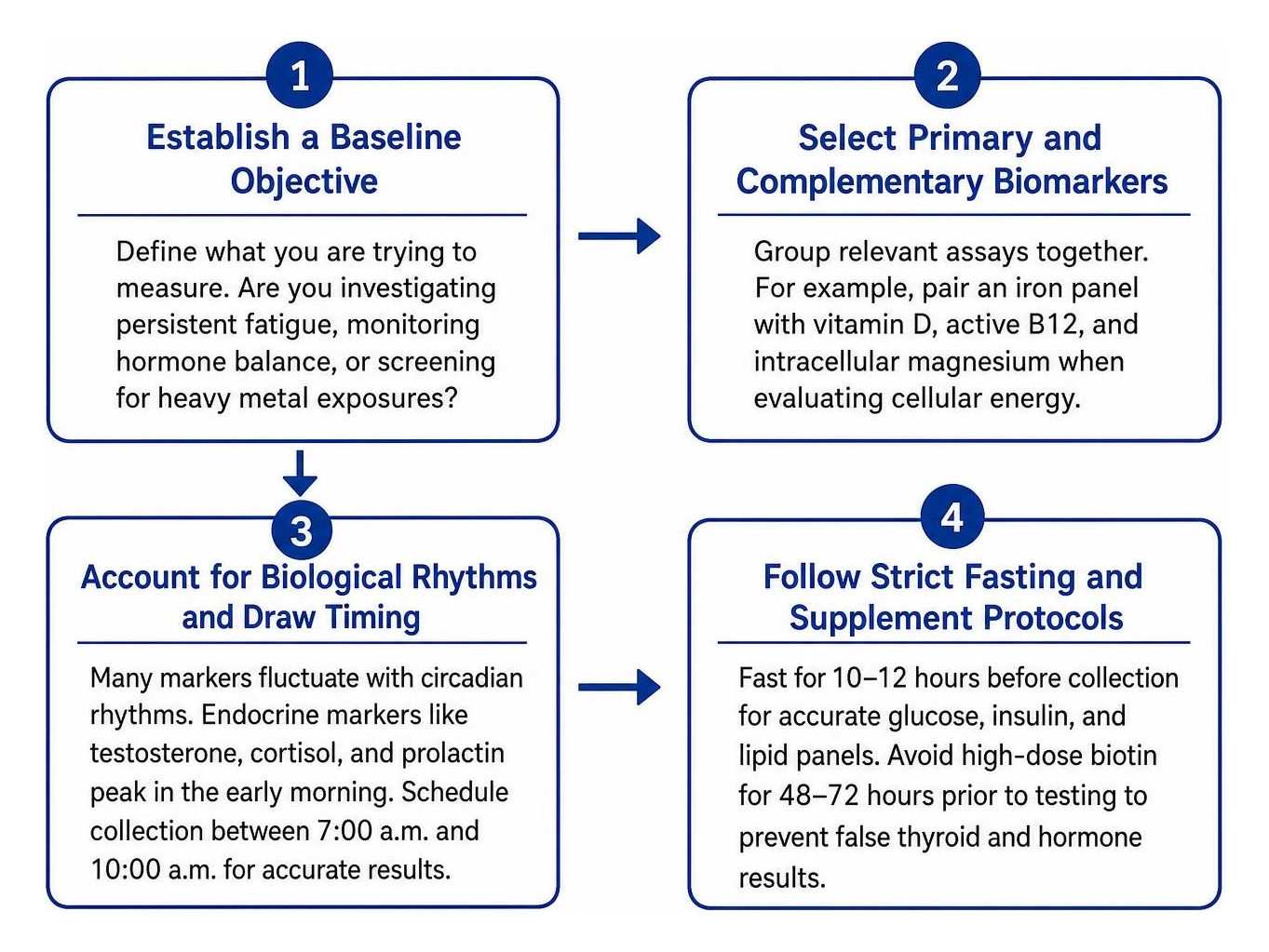
- Establish a Baseline Objective: Define what you are trying to measure. Are you investigating a contaminant, comparing supplier lots, verifying a coating, screening for trace metals, or identifying an unknown residue?
- Select Primary and Complementary Analytes: Group relevant analyses together. For example, a contamination investigation may pair trace element identification with matrix comparison, while a materials verification project may focus on target metals, elemental ratios, and detection limits.
- Account for Sample Matrix and Preparation: Solids, powders, liquids, thin films, biological materials, polymers, metals, and ceramics can require different preparation steps. The right protocol should specify whether the sample can be tested non-destructively, whether digestion or sectioning is needed, and how much material is required.
- Define Reporting and Decision Criteria Up Front: Custom testing is most useful when the final report maps directly to a decision. Before testing begins, clarify whether you need a pass-fail comparison, quantitative concentration data, qualitative screening, lot-to-lot comparison, or a technical summary suitable for internal documentation.
Targeted Testing for Elements, Materials, and Process Control
Personalized testing allows you to group specialized assays around specific industrial and research questions:
- Trace Element Identification and Quantification: Rather than running a broad generic scan, a targeted element panel can focus on the metals, minerals, or contaminants most relevant to the material or production process.
- Non-Destructive and Destructive Analysis Options: Some samples must remain intact for archival, legal, or product-development reasons. Others can be digested, sectioned, or otherwise prepared to improve quantification. A custom protocol weighs analytical sensitivity against sample preservation.
- Supplier, Batch, and Process Comparisons: Custom lab testing can compare elemental fingerprints across lots, vendors, or production stages to determine whether a change in raw material or process conditions is affecting the finished product.
Step-by-Step Guide to Ordering, Pricing, and Logistics
Custom analytical testing works best when the laboratory understands the sample, the decision you need to make, and the technical constraints before work begins. The process from initial inquiry to final report is designed to translate a complex material question into a clear scope of work, practical sample instructions, and usable results.
Navigating Custom Lab Orders and Sample Submission
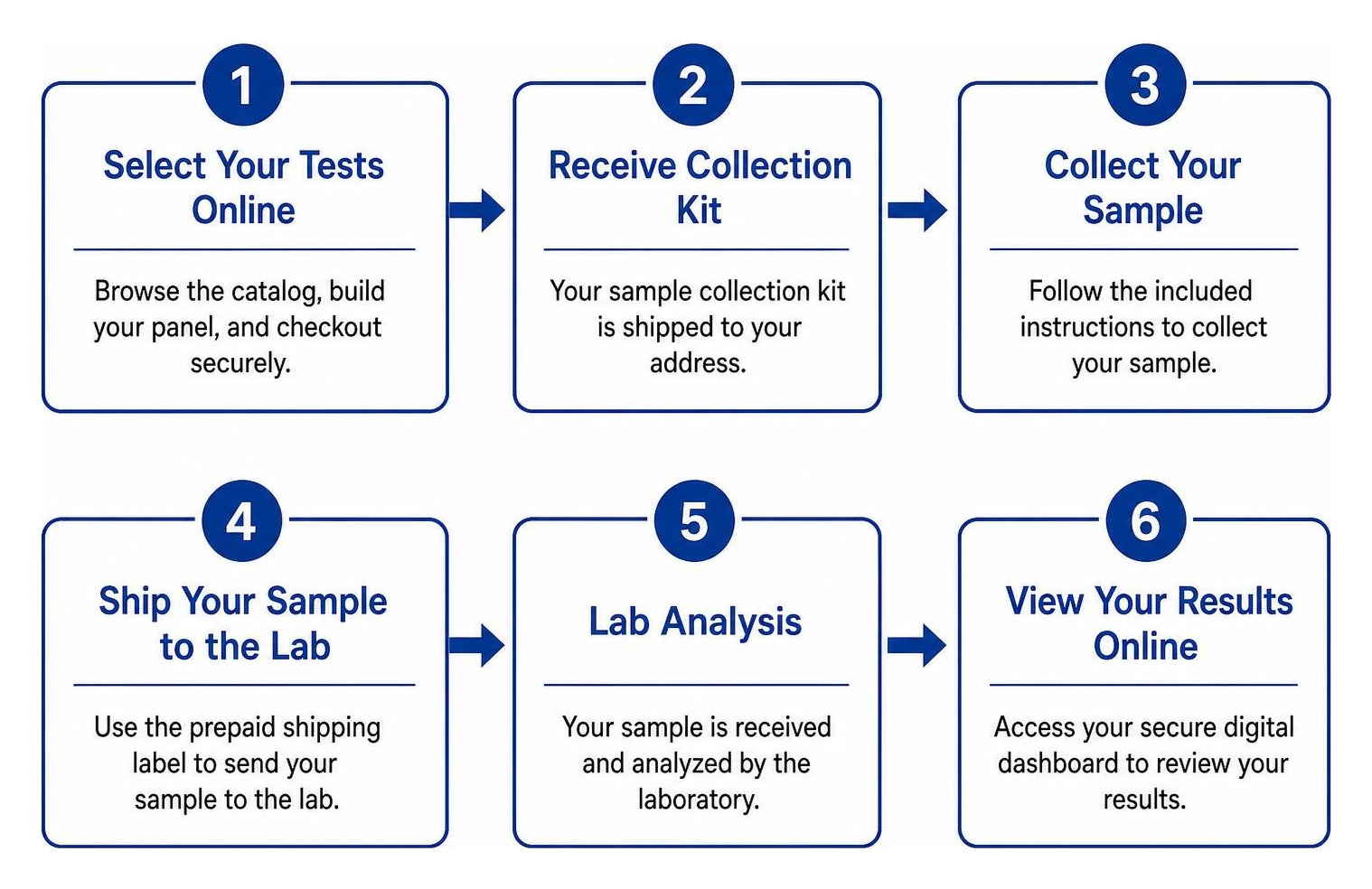
Acquiring your testing panel is designed for maximum clarity:
- Define the Testing Question: Share the sample type, suspected issue, target elements or contaminants, required detection limits, and any relevant product or process background.
- Confirm the Recommended Method: The laboratory reviews the objective and recommends an analytical approach, which may include non-destructive screening, destructive preparation, trace element quantification, comparison testing, or custom method development.
- Submit Samples with Clear Documentation: Samples are packaged and shipped according to the agreed instructions. For sensitive projects, documentation may include chain-of-custody details, lot numbers, sample IDs, and handling notes.
- Receive Technical Results: After analysis and quality review, results are delivered in a report that may include quantitative data, qualitative findings, method notes, and interpretation tied to the original project objective.
Understanding Costs, Project Scope, and Savings Strategies
Traditional laboratory testing can become expensive when a customer is forced into broad packages that do not match the actual question. Custom lab testing controls cost by aligning the scope with the exact analytical need.
Pricing is usually influenced by the number of samples, the sample matrix, preparation requirements, target analytes, detection limits, turnaround expectations, and whether the work requires method development. A simple elemental screen may be straightforward, while trace-level quantification in a difficult matrix may require additional preparation, calibration, or validation.
The best savings strategy is to define the decision criteria before testing begins. If the goal is to confirm whether a contaminant is present, the test design may differ from a project that requires fully quantitative results across multiple lots. Clear project scoping helps avoid unnecessary line items while preserving the accuracy and defensibility of the final data.
Accuracy, Confidentiality, and Professional Result Interpretation
A lab test is only as valuable as the quality of the analytical machinery, sample preparation, calibration strategy, and data review behind it. When selecting where to order custom lab testing, understanding quality standards, confidentiality practices, and how to interpret technical results is critical.
To understand the core scientific principles behind modern quantitative instrumentation, review our Elemental Testing Lab 101 guide for an overview of laboratory quality frameworks.
Laboratory Quality Standards and Data Confidentiality
Medical diagnostic laboratories are often discussed in relation to the Clinical Laboratory Improvement Amendments (CLIA), but industrial, research, and materials-focused custom lab testing requires a different fit-for-purpose quality framework. For analytical chemistry projects, buyers should evaluate whether the laboratory can explain its calibration practices, quality controls, method suitability, reporting limits, and sample handling procedures.
Strong analytical quality systems typically emphasize:
- Stringent Quality Control Protocols: Routine calibration, blanks, standards, replicate measurements, instrument checks, and documented procedures help ensure that analytical outputs remain precise across sample runs.
- Confidential Data Infrastructure: Customer identities, proprietary formulations, product details, and analytical outputs should be protected through controlled access, secure communication, and clear confidentiality practices. Your results should not be shared with unauthorized third parties without explicit consent.
When working with specialized materials, identifying contaminants, or verifying raw components, our dedicated team provides specialized analytical chemistry services to deliver reliable, trace-level accuracy.
Translating Raw Analytical Data into Actionable Insights
Receiving a technical report filled with numerical values, reporting limits, method notes, and flagged observations can feel overwhelming. Interpreting these results effectively requires a two-step framework:
- Understanding Screening vs. Quantitative Results: A screening result can indicate which elements or contaminants are present, while a quantitative result provides measured concentrations under defined method conditions. Knowing the difference helps teams avoid overinterpreting exploratory data.
- Comparing Results Against the Right Benchmark: Analytical data becomes more useful when compared with a specification, supplier certificate, historical lot, control sample, regulatory threshold, or internal acceptance criterion.
- Collaborating with Technical Professionals: Raw laboratory data is not always self-explanatory. When results affect production, safety, compliance, litigation, or product design, work with qualified technical personnel who can connect the analytical findings to process knowledge and practical next steps.
Frequently Asked Questions About Custom Lab Tests
Do I need a doctor’s prescription to order custom lab tests?
No. For industrial, research, materials, and product-related custom lab testing, a doctor’s prescription is not relevant. These projects are not medical diagnostic services. Instead, customers typically begin by describing the sample, the analytical question, the target elements or contaminants, and any reporting requirements so the laboratory can recommend an appropriate scope of work.
How fast are results typically returned for specialized test panels?
Turnaround time depends on the sample type, preparation requirements, number of samples, target analytes, and whether method development is required. Straightforward elemental screening or routine quantitative work may be completed relatively quickly, while complex matrices, trace-level detection, destructive preparation, or multi-stage investigations can require additional time for preparation, calibration, review, and reporting.
Can I request a custom report format for internal quality or research records?
Yes. Many custom lab testing projects require more than a simple data table. Depending on the project scope, reports can be structured around sample IDs, lot numbers, target analytes, reporting limits, comparison samples, method notes, and technical observations. Defining the preferred report format before testing begins helps ensure the final deliverable supports your quality, engineering, research, or procurement decision.
Conclusion
Custom lab testing gives organizations a practical way to answer specific technical questions without paying for unnecessary pre-set packages. Whether you need trace element identification, contaminant investigation, coating evaluation, supplier comparison, or process troubleshooting, a tailored analytical plan helps connect the right method to the right material and the right decision.
At Elemental Analysis Inc., located in Lexington, Kentucky, we bring an uncompromising standard of analytical accuracy, speed, and precision to material characterization, trace element quantification, and contract testing. As the premier commercial PIXE (Proton Induced X-ray Emission) facility, we deliver non-destructive and destructive testing solutions designed to solve complex analytical challenges with rapid turnaround times and competitive pricing. Explore our full suite of expert analytical chemistry testing services to discover how our world-class testing infrastructure can support your analytical and research objectives today.