
Beginner’s Guide to Elemental Analytics
What is Elemental Analytics?
At its core, elemental analytics is the process of identifying, quantifying, and analyzing the elemental and chemical composition of physical matter. Unlike general chemistry, which often looks at how molecules interact, elemental analytics zooms in on the periodic table itself. It asks a fundamental question: Which specific atoms make up this material, and in what exact quantities?
To understand this field, we must distinguish between two primary categories of analysis:
- Major Element Analysis (Bulk Composition): This involves identifying the primary building blocks of a sample. These are the elements present in high concentrations (typically measured in weight percentages, or wt%). For organic materials, this usually means analyzing Carbon, Hydrogen, Nitrogen, Oxygen, and Sulfur (CHNOS). For geological or industrial materials, it might mean identifying major oxides like silica, alumina, or iron oxide. Major element analysis is essential for determining bulk composition, verifying product purity, and understanding the basic formulation of a substance.
- Trace Element Analysis (Impurities): This is the science of finding the “needle in the haystack.” Trace element analysis identifies elements present in minuscule quantities—often measured in parts per million (ppm), parts per billion (ppb), or even parts per trillion (ppt). Even at these ultra-low levels, trace elements can completely alter the properties of a material. For example, a few ppb of lead in drinking water can cause severe neurological damage, while trace impurities in a semiconductor alloy can render an entire microchip useless.
At Elemental Analysis Inc., we have spent decades pioneering this field from our state-of-the-art laboratory in Lexington, Kentucky. As the first commercial Proton-Induced X-ray Emission (PIXE) laboratory, we have built our reputation on providing highly accurate trace element identification, quantification, and speciation services across a wide range of industries. Our unique selling proposition (USP) is simple: we provide both non-destructive and destructive testing with exceptionally fast turnaround times and highly competitive pricing.
To learn more about our team and our history, you can read our About Us page.
How Does Elemental Analytics Differ From Traditional Data Analytics?
When most business leaders hear the word “analytics,” they immediately think of web traffic, financial spreadsheets, customer behavior patterns, or SQL databases. This is traditional data analytics, which operates entirely in the digital realm. It processes virtual, transactional, and behavioral data streams to optimize business processes.
Elemental analytics, however, bridges the gap between physical chemistry and digital data. It takes physical, tangible matter – a scoop of soil, a vial of a pharmaceutical active ingredient, or a fragment of an industrial pipe – and translates its atomic and molecular structures into highly structured, actionable datasets.

| Feature | Traditional Data Analytics | Elemental Analytics |
|---|---|---|
| Data Source | Clicks, transactions, sensor logs, databases | Physical matter (atoms, molecules, isotopes) |
| Primary Focus | Behavioral patterns, financial trends, software performance | Material purity, chemical safety, regulatory compliance |
| Methods Used | Statistical modeling, SQL queries, BI dashboards | Spectroscopy, chromatography, particle acceleration |
| Output | Predictive business trends, user profiles | Elemental concentrations, chemical speciation reports |
The demand for this physical-to-digital translation is growing at an unprecedented rate. The global elemental analysis market was valued at USD 4.30 billion in 2024 and stood at USD 4.54 billion in 2025. As of June 2026, the market is continuing its rapid expansion, projected to reach USD 6.49 billion by 2030, growing at a resilient Compound Annual Growth Rate (CAGR) of 7.4%.
This growth is driven by a fundamental shift in how modern organizations view their physical data. Today, world-class industrial and laboratory operations no longer treat chemistry reports as static PDFs to be filed away in a cabinet. Instead, they treat chemical data as a dynamic, strategic asset. By integrating elemental analytics with modern data platforms, organizations can de-silo and contextualize their physical operations data, linking raw chemical compositions directly to supply chain decisions, product quality models, and environmental safety compliance.
What Are the Core Technologies Driving Elemental Analytics?
To translate physical matter into digital data, scientists rely on a suite of highly sophisticated analytical instruments. Choosing the right technique depends on whether the sample can be destroyed, the required detection limits, and whether you are looking for organic or inorganic elements.
The table below provides a high-level comparison of the industry’s primary elemental analysis techniques:
| Technique | Full Name | Destructive? | Detection Limits | Best Suited For |
|---|---|---|---|---|
| ICP-MS / ICP-OES | Inductively Coupled Plasma | Yes (requires acid digestion) | ppt to ppm | Ultra-trace metal analysis, multi-element screening |
| XRF | X-ray Fluorescence | No (non-destructive) | 10 ppm to 100% | Rapid surface screening, metal alloys, geological samples |
| PIXE | Proton-Induced X-ray Emission | No (non-destructive) | sub-ppm | Air filters, delicate art, archaeology, thin films |
| NAA | Neutron Activation Analysis | No (non-destructive) | ppb to ppm | Bulk analysis, high-purity materials, forensics |
| CHNOS | Carbon/Hydrogen/Nitrogen/Oxygen/Sulfur | Yes (combustion) | 0.05% to 100% | Organic bulk composition, fuels, pharmaceuticals |
Let’s look at these core technologies in more detail:
Inductively Coupled Plasma (ICP-OES and ICP-MS)
Inductively Coupled Plasma techniques are the gold standard for high-sensitivity trace metal analysis.
- ICP-OES (Optical Emission Spectrometry): This technology uses an argon plasma torch heated to approximately 10,000 Kelvin to excite the atoms in a liquid sample. As the excited atoms return to their ground state, they emit light at wavelengths characteristic of each element. ICP-OES is highly versatile and accounted for the largest market share of 33% in the elemental analysis market in 2024.
- ICP-MS (Mass Spectrometry): Instead of measuring light emissions, ICP-MS channels the ions generated by the plasma into a mass spectrometer. This allows for incredibly low detection limits (down to parts per trillion) and isotopic analysis.
Because these methods require liquid samples, solid materials must undergo acidic digestion beforehand, making this a destructive technique. You can read more about how we apply these methods on our ICP service page.
X-ray Fluorescence (XRF)
For organizations that need rapid, non-destructive testing, XRF is an exceptional tool. By bombarding a sample with high-energy X-rays, the instrument ejects inner-shell electrons from the target atoms. When outer-shell electrons drop down to fill the vacancies, they emit secondary (fluorescent) X-rays unique to each element. XRF is widely used for solid samples, metal alloys, and geological mining operations because it requires minimal sample preparation and leaves the sample completely intact.
Proton-Induced X-ray Emission (PIXE)
PIXE is an advanced ion-beam analysis technique that offers unparalleled sensitivity for non-destructive testing. By accelerating protons using a particle accelerator and directing them at a sample, PIXE excites the atoms and measures the resulting X-ray emissions.
At Elemental Analysis Inc., we are proud to be the first commercial PIXE laboratory in the world. Operating from our Lexington, KY facility, we use PIXE to analyze air quality filters, historical artifacts, thin films, and specialized industrial materials where preserving the sample’s physical integrity is non-negotiable.
Neutron Activation Analysis (NAA)
NAA is a highly specialized nuclear process used to determine the concentrations of elements in a vast range of materials. The sample is bombarded with neutrons in a nuclear reactor, causing the elements within the sample to form radioactive isotopes. As these isotopes decay, they emit gamma rays with specific energy levels that can be measured with extreme precision. NAA is completely non-destructive and is ideal for analyzing bulk samples where sample digestion is difficult or impossible.
Organic Elemental Analysis (CHNOS & OC/EC)
While techniques like ICP and PIXE excel at identifying metals, organic elemental analysis focuses on the non-metal elements that form the basis of organic chemistry.
- CHNOS Analyzers: These instruments burn solid or liquid samples in a high-oxygen environment, converting carbon to $\text{CO}_2$, hydrogen to $\text{H}_2\text{O}$, nitrogen to $\text{NO}_x$, and sulfur to $\text{SO}_2$. These gases are then separated and quantified to give an exact weight percentage of each element. Learn more on our CHNO page.
- OC/EC (Organic Carbon / Elemental Carbon): This specialized thermal-optical analysis is crucial for environmental monitoring, particularly in distinguishing between organic carbon (from biological sources or combustion byproducts) and elemental carbon (soot or black carbon) in air pollution samples. Learn more on our Oc Ec page.
To support regional research and environmental health in Kentucky, we collaborate with local academic institutions, including the Analytical Core | UK-CARES – University of Kentucky Research, which focuses on the intersection of environmental cleanups and human health.
Which Industries Benefit Most From Elemental Analytics?
From the food we eat to the medicines we take and the water we drink, elemental analytics plays a quiet but critical role in protecting public health and ensuring industrial quality.
Pharmaceutical and Biopharmaceutical Laboratories
The pharmaceutical industry is one of the heaviest users of elemental analytics, with the laboratory testing segment projected to register the highest CAGR of 7.0% between 2025 and 2030. Drug manufacturers must comply with strict international guidelines (such as USP <232>/<233> and ICH Q3D) that limit the presence of elemental impurities in drug products.
Because catalysts like palladium or platinum are frequently used in drug synthesis, and because manufacturing equipment can leach metals like nickel, chromium, or lead into products, pharmaceutical companies rely on our rigorous Services to verify that their therapies are safe for patient consumption.
Environmental Testing and Public Health
Heavy metal contamination is one of the most pressing public health challenges of our time. The World Health Organization (WHO) attributed more than 1.5 million deaths globally in 2021 to lead exposure alone, underscoring the vital importance of testing and remediation programs.
Furthermore, the WHO/UNICEF Joint Monitoring Programme reports that 2 billion people still use drinking water containing at least one chemical contaminant above guideline limits. Arsenic exposure alone affects approximately 140 million people across more than 70 countries.
In response to these threats, regulatory agencies are taking aggressive action:
- The U.S. EPA Lead and Copper Rule: The EPA has ordered a comprehensive inventory and eventual replacement of 9.2 million lead service lines across the United States. This massive infrastructure undertaking requires continuous, high-volume sampling and confirmation testing for municipal water utilities.
- Regional Focus in Kentucky: From our base in Lexington, KY, we work closely with regional partners to monitor local water systems, agricultural soils, and industrial runoff, ensuring that Kentucky’s communities remain safe from toxic heavy metals.
Food and Beverage Safety
Heavy metals can accumulate in crops through contaminated soil and water. Recent analyses of the EU Rapid Alert System for Food and Feed (RASFF) show thousands of heavy metal notifications over recent years, with mercury (~1,203 notifications), cadmium (~741 notifications), and lead (~215 notifications) representing the most frequent contaminants.
To protect consumers, global regulators enforce strict limits:
- The U.S. FDA enforces an action level of 100 ppb for inorganic arsenic in infant rice cereal.
- The European Food Safety Authority (EFSA) sets the maximum allowable cadmium level in chocolate at 0.8 mg/kg.
- India’s Bureau of Indian Standards (BIS) specifies a maximum limit of 0.01 mg/L for lead in drinking water.
- The U.S. EPA maximum contaminant level goal (MCLG) for lead in drinking water is zero, with an action level of 15 ppb, while the WHO guideline is even stricter at 10 ppb.
With North America accounting for a dominant 40.8% share of the global elemental analysis and heavy metal testing market in 2024, food producers across the continent rely on our comprehensive A to Z Testing protocols to ensure full compliance with both domestic and international regulations. You can follow our updates and industry insights on the Elemental Analysis Inc. | LinkedIn page.
How Does Elemental Analytics Support Advanced Data Modeling and AI?
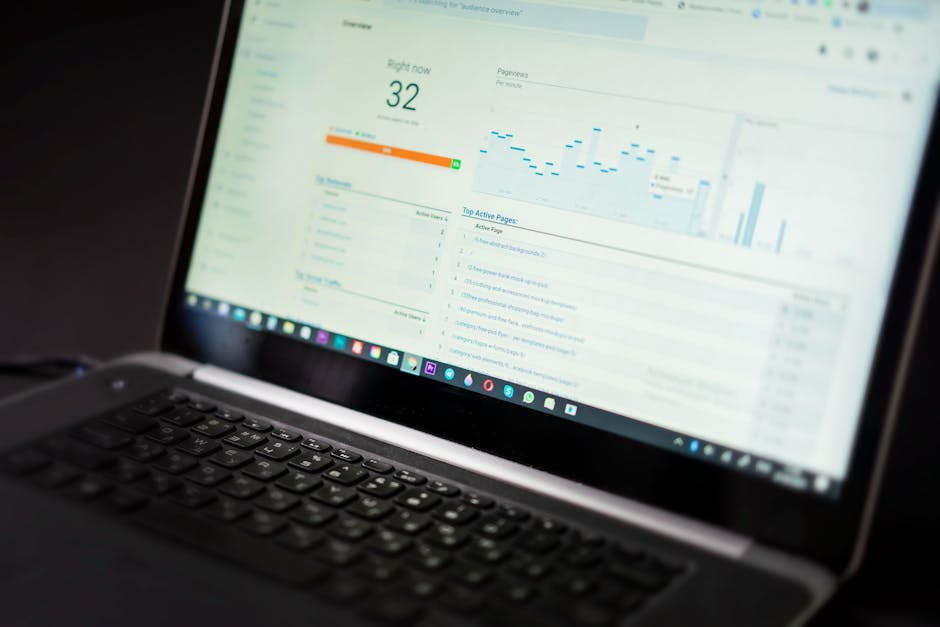
We are living in an era where laboratory operations (LabOps) are being transformed by artificial intelligence, machine learning, and automation. Elemental analytics is no longer just about generating a single data point; it is about feeding high-fidelity chemical datasets into predictive models.
Transforming Time-Series Data Into Operational Insights
Modern, connected laboratories generate vast amounts of data. Advanced LabOps platforms can collect time-series data every 15 seconds from tens of thousands of assets simultaneously. By combining environmental sensor data, such as ambient temperature, humidity, and pressure, with the performance metrics of analytical instruments, such as vacuum pressures in an ICP-MS or detector temperatures in an XRF, AI models can detect subtle anomalies before they lead to instrument failure.
For elemental analytics laboratories, this can make instrument operations more reliable and data review more efficient. When instrument health, calibration history, quality control data, and sample results are evaluated together, teams can spot trends that may affect turnaround time, data quality, or maintenance planning.
Shifting from Reactive Monitoring to Agentic AI
The future of laboratory management lies in shifting from reactive monitoring, where teams wait for an alarm to go off, to proactive, autonomous guidance. This is where Agentic AI comes into play.
Unlike traditional software that requires human prompts to run an analysis, Agentic AI systems continuously evaluate laboratory data streams to guide decisions autonomously. For example, an AI agent can:
- Monitor Instrument Criticality: Combine instrument usage patterns, historical calibration drift, and the financial impact of downtime to calculate a dynamic “Health Score” for every spectrometer in the lab.
- Optimize Sustainability: Identify when non-essential analytical equipment can be safely powered down during off-hours, quantifying energy savings in both dollars and carbon emission reductions to support corporate ESG reporting.
How Do Organizations Overcome the Challenges of Elemental Analytics?
While the benefits of elemental analytics are clear, implementing these capabilities in-house presents significant operational and financial hurdles.
Challenge 1: Astronomical Capital and Operating Costs
Building a state-of-the-art analytical chemistry laboratory is incredibly expensive.
- Instrument Procurement: High-end instruments like ICP-MS, ICP-OES, and XRF spectrometers routinely cost between USD 150,000 and USD 400,000 per unit.
- Daily Consumables: Running an ICP instrument requires a continuous supply of high-purity argon gas, which costs between USD 80 and USD 120 per day of continuous operation.
- Calibration and Quality Control: Annual purchases of certified reference materials and calibration standards routinely exceed USD 10,000 for a mid-sized laboratory.
- Specialized Staffing: Operating these instruments requires highly trained analytical chemists who command competitive salaries.
Challenge 2: Navigating Regulatory Fragmentation
Testing standards are not uniform. A manufacturing company exporting products globally must comply with a patchwork of regulations, including the EPA in the US, REACH and RoHS in Europe, and various state-level mandates. Navigating this fragmentation requires constant procedural updates, regular system validations, and expensive audits, which can quickly overwhelm an internal quality control team.
The Solution: Strategic Outsourcing
To overcome these barriers, smart organizations partner with specialized, accredited commercial laboratories. By outsourcing your testing to us at Elemental Analysis Inc., you gain access to world-class instrumentation and decades of scientific expertise without the burden of capital expenditure.
Operating from our centralized facility in Lexington, Kentucky, we provide:
- Cost-Effective Testing: Pay only for the analyses you need, converting fixed capital costs into predictable operating expenses.
- Unmatched Versatility: Access a complete suite of both destructive (ICP-MS, CHNOS) and non-destructive (PIXE, XRF, NAA) testing methods under one roof.
- Rapid Turnaround: Our optimized workflows ensure that you get your data back quickly, preventing supply chain bottlenecks.
If you are ready to discuss your testing requirements, please visit our Contact Us page to speak directly with one of our analytical experts.
Frequently Asked Questions About Elemental Analytics
What is the difference between destructive and non-destructive elemental testing?
The primary difference lies in whether the sample is preserved or consumed during the analysis:
- Destructive Testing: Methods like ICP-MS or CHNOS require the physical sample to be altered. For ICP, the sample must be dissolved in strong acids (digested) to create a liquid nebulized into the plasma. For CHNOS, the sample is completely burned. While destructive testing offers incredible sensitivity, the sample cannot be recovered.
- Non-Destructive Testing: Methods like PIXE, XRF, and NAA analyze the sample without changing its physical or chemical structure. This is critical when testing rare, expensive, or historically significant items (such as archaeological artifacts, fine art, or proprietary aerospace components) because the sample can be returned to you completely unharmed.
Why is elemental speciation important?
Standard elemental analysis tells you the total concentration of an element in a sample, but it doesn’t tell you how that element is chemically bound. Speciation identifies the specific chemical form or oxidation state of an element, which is critical because different species of the same element can have wildly different properties:
- Arsenic: Organic arsenic (commonly found in seafood) is relatively non-toxic, whereas inorganic arsenic is highly toxic and a known carcinogen.
- Chromium: Trivalent chromium (Chromium-III) is an essential nutrient for human metabolism, while hexamallent chromium (Chromium-VI) is highly toxic and regulated as a severe environmental hazard.
By understanding the exact chemical species, we can help you make accurate risk assessments and ensure compliance with environmental and food safety standards.
How does elemental analytics ensure data quality and compliance?
Ensuring data integrity in a regulated environment requires a multi-layered approach to quality control:
- Certified Reference Materials (CRMs): We run known, highly stable standards alongside your samples to verify instrument calibration and accuracy.
- System Validation: Our instruments undergo regular calibration and maintenance protocols to prevent drift and ensure reproducibility.
- Regulatory Alignment: For highly regulated industries like pharmaceuticals, we maintain GxP-ready records and 21 CFR Part 11-aligned audit histories, ensuring that every data point is fully traceable, defensible, and secure.
How Can You Get Started with Elemental Analytics?
As we move through 2026, the strategic value of elemental analytics has never been higher. Whether you are navigating the EPA’s lead service line mandates, verifying the purity of a novel pharmaceutical compound, or ensuring that your food products comply with strict global safety standards, having access to fast, accurate chemical data is a major competitive advantage.
At Elemental Analysis Inc., we make it easy to get the data you need. Rather than investing hundreds of thousands of dollars in complex in-house instrumentation, you can leverage our specialized laboratory in Lexington, KY. We are proud to offer a complete range of trace element identification, quantification, and speciation services tailored to your specific industry requirements. Our focus is providing premier, accredited laboratory testing services directly from our state-of-the-art facility in Kentucky to clients across North America.
To learn more about our testing capabilities and how we can support your organization, explore our comprehensive Services page today. If you are ready to submit a sample or request a custom quote, reach out to our team of experts and let us help you turn your physical materials into powerful, actionable data.